January 9, 2026
By Ferran Garcés
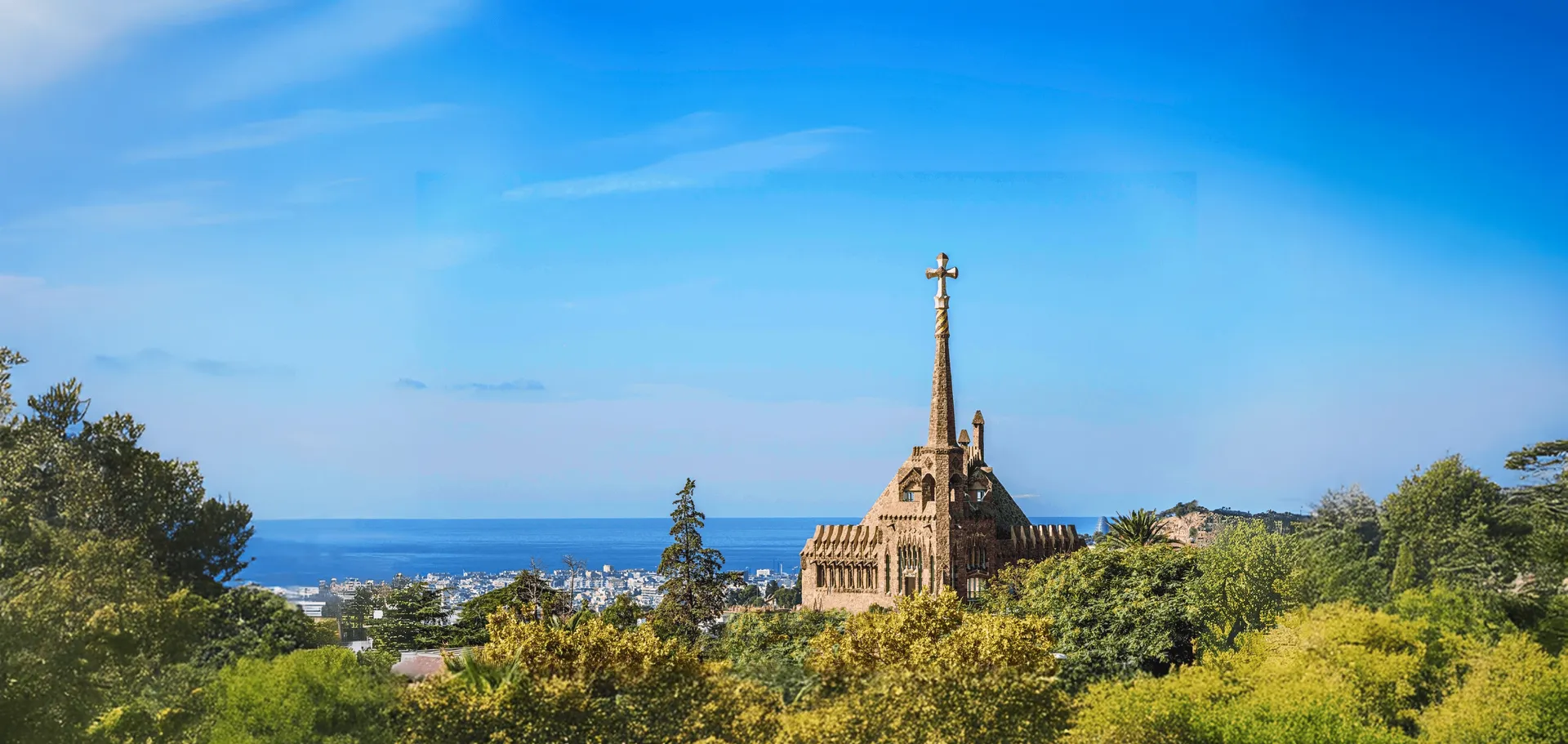
We recently welcomed the New Year, but we also have to say goodbye to the nativity scene and other Christmas traditions. However, at Torre Bellesguard, it’s hard to bid farewell to one of the most prominent elements of these festivities. And it’s hard because it is right at the center of the building’s main façade, in the form of a stained glass window. We’re talking about the Christmas star, also known as the Star of the East or the Magi’s star. We mention it on every visit. It must also be referenced in the building’s historical studies. As you see, Christmas never disappears from Torre Bellesguard…
Present since the first study
The first biography of Gaudí was published two years after his death, in 1928. The author, Josep F. Ràfols, was an architect who had worked personally with the master. For him, the most remarkable element of Torre Bellesguard is the mentioned stained glass, which was already interpreted then as the Star of the East (1). Joan Bergós, another architect friend and Gaudí’s biographer, even stated that the base of the stained glass, shaped like steps, was meant to contain images of the Magi (2).
Later, other interpretations were proposed, linking the stained glass to the Virgin Mary, also represented with an eight-pointed star. Both interpretations are complementary. After all, the Magi and the Virgin meet in the Bethlehem nativity scene. If we were to study the history of Christmas, this star would also deserve mention.
The original image
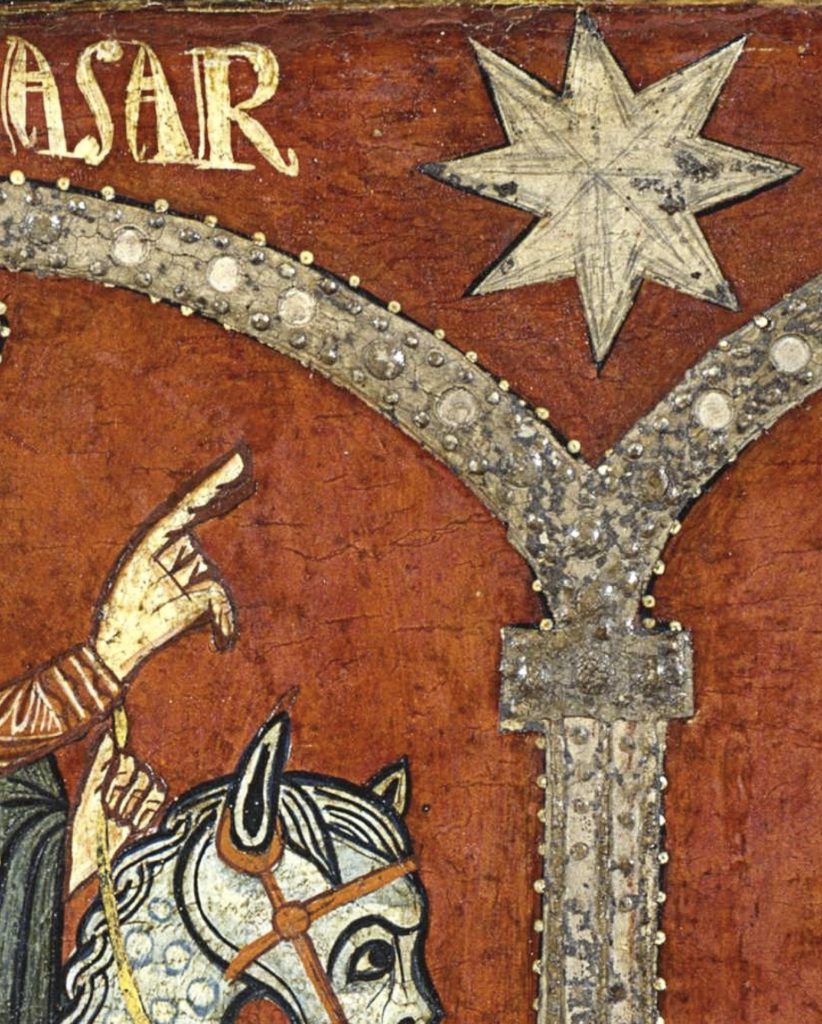
In the earliest representations of Christmas and the Epiphany, the eight-pointed star was the most common form of this popular symbol, though not the only one. Later, the image would take on other appearances, following the development of astronomy and art, along with social changes such as the introduction of the Black King. Today, recalling Gaudí’s advice that “originality consists in returning to the origins,” we thought it would be a good idea to show some examples of the earliest representations of the Star of the East. This journey also allows us to see how Western art and the elements of this well-known scene have evolved.
Historical examples
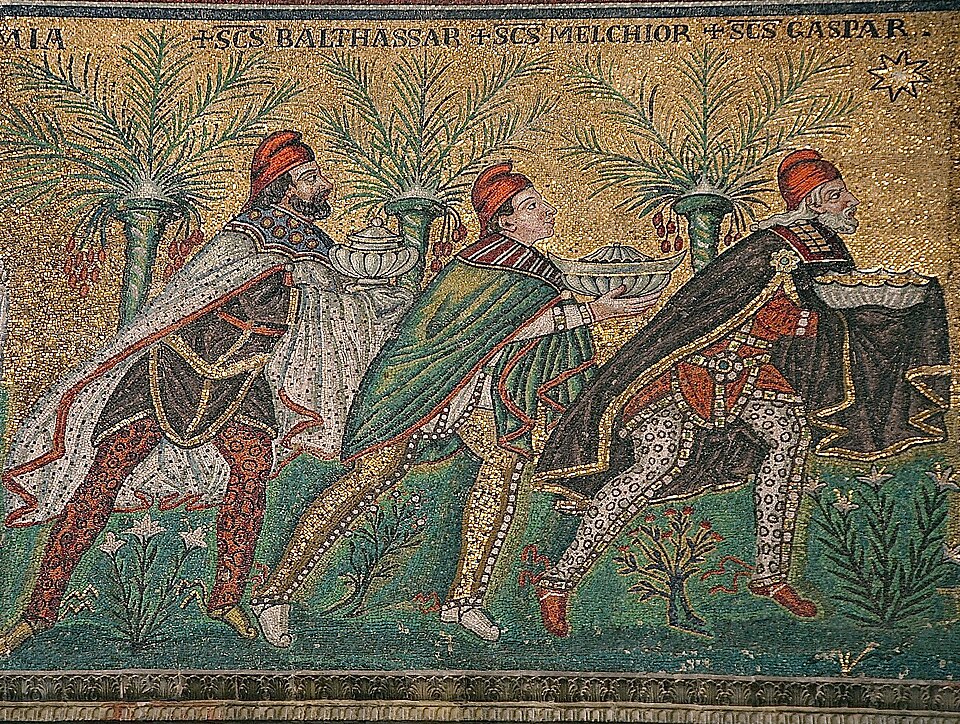
The Three Magi, Byzantine mosaic, c. 565, Basilica of Sant’Apollinare Nuovo, Ravenna, Italy. Considered the first image where the names of the Magi appear.
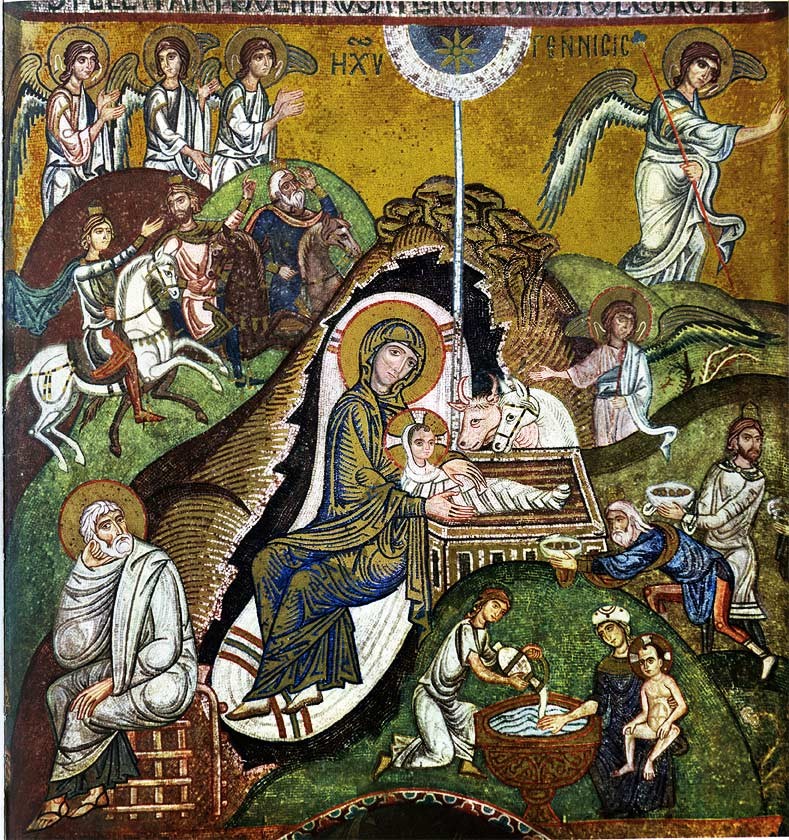
Nativity, Byzantine mosaic, 12th century, Palatine Chapel, Palermo, Italy.
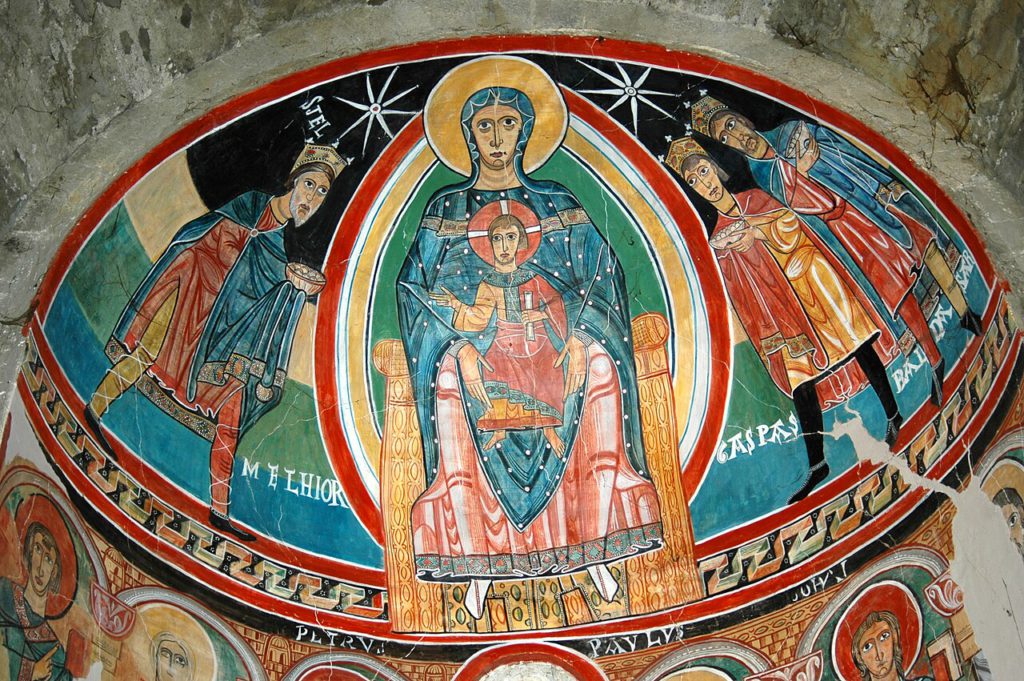
The Adoration of the Magi and the Virgin in the apse of Santa Maria de Taüll, 12th century. Lleida, Catalonia.
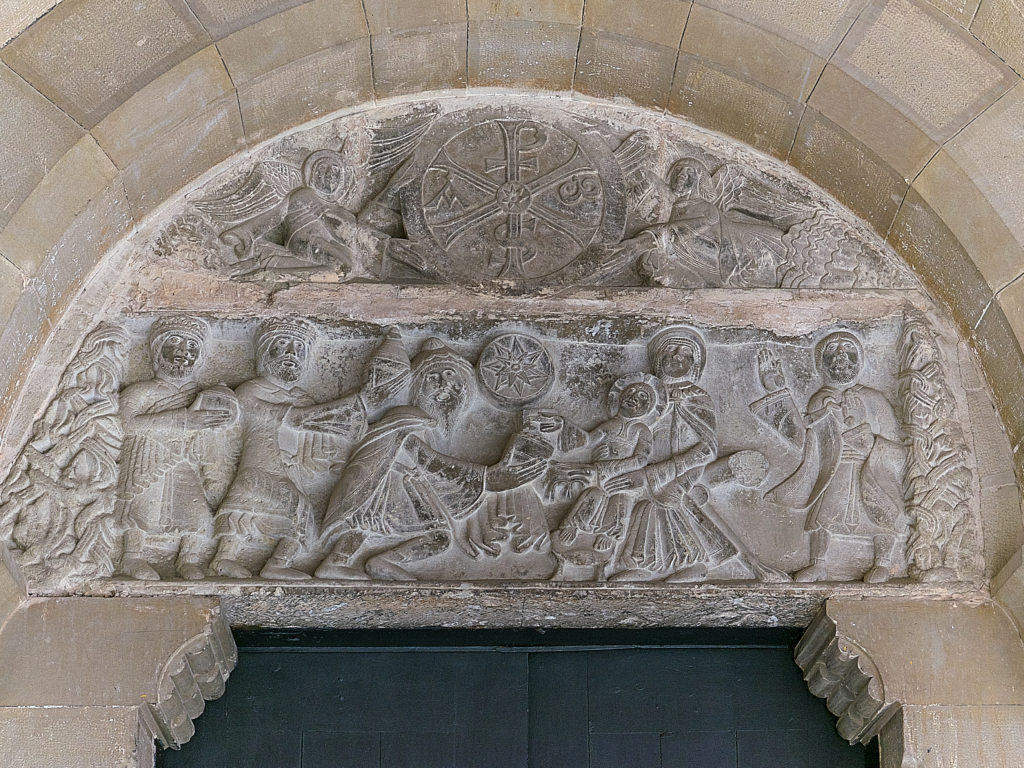
Chi-Rho and Epiphany, stone relief, 12th century, Cloister of San Pedro el Viejo. Huesca, Aragon.
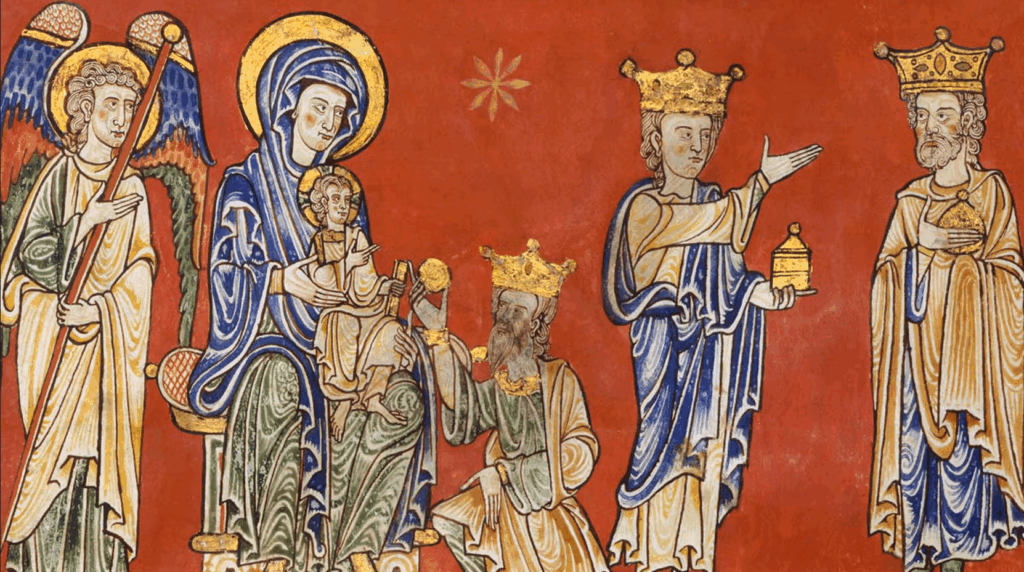
Adoration of the Magi, c. 1180, Spanish Beatus now in the Metropolitan Museum of Art, New York.
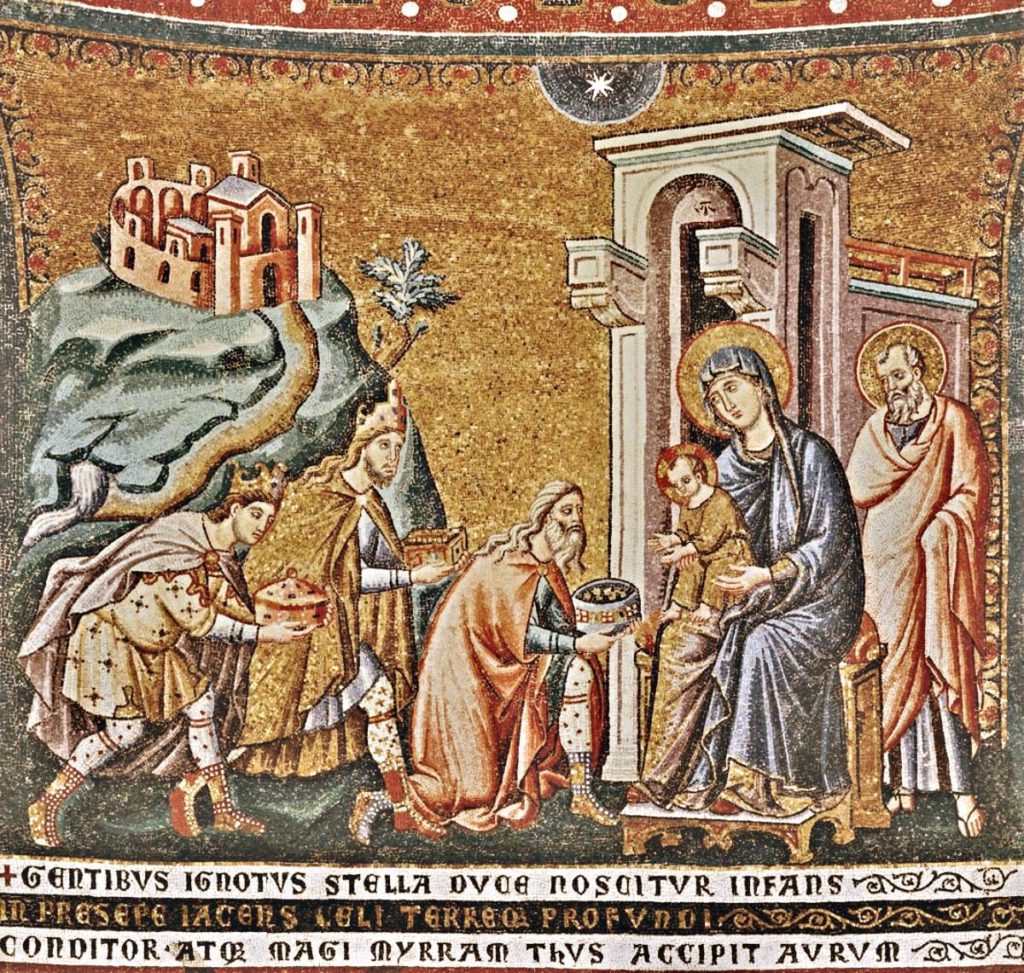
The Adoration of the Magi, Pietro Cavallini, c. 1200, Basilica of Santa Maria in Trastevere, Rome, Italy.
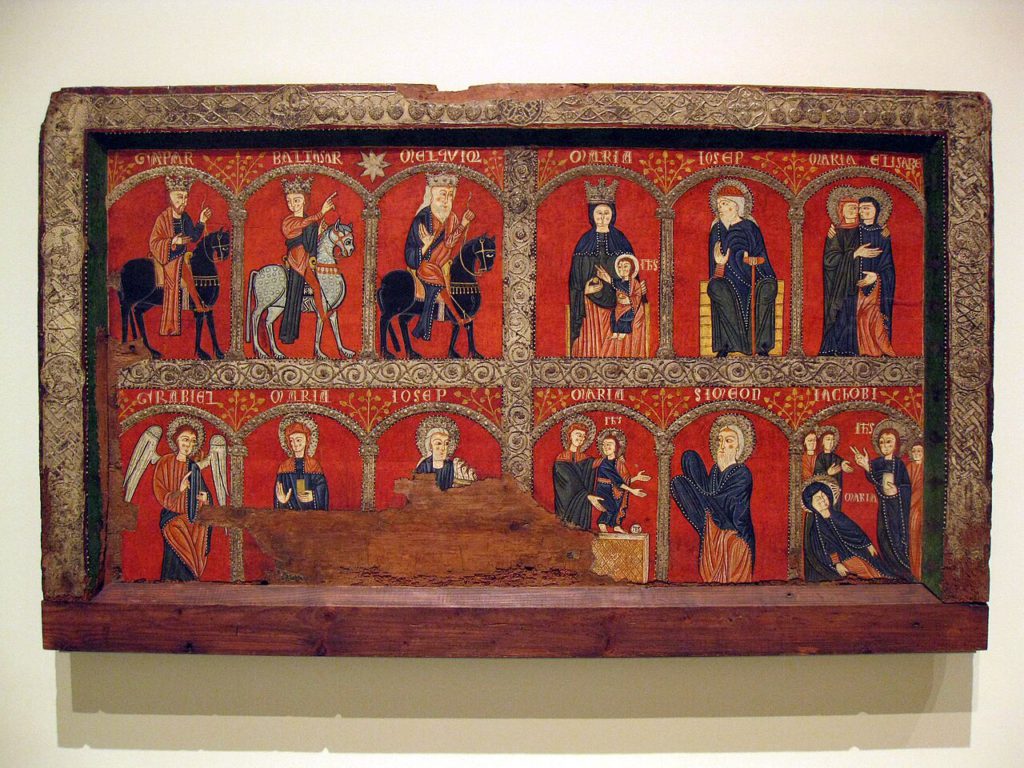
Nativity, painting, first third of the 13th century. Altar frontal of Santa Maria de Mosoll, Lower Cerdanya, Catalonia. Currently housed at MNAC (Museu Nacional d’Art de Catalunya).
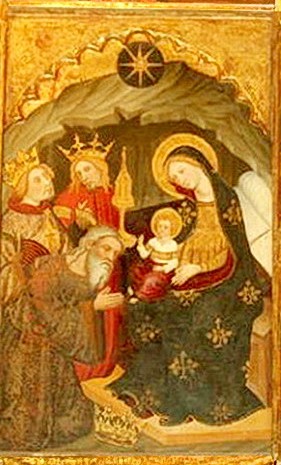
Altarpiece of the Holy Spirit, Pere Serra, 1394. Collegiate Basilica of Santa Maria de Manresa. Detail of the Epiphany on one of the left panels.
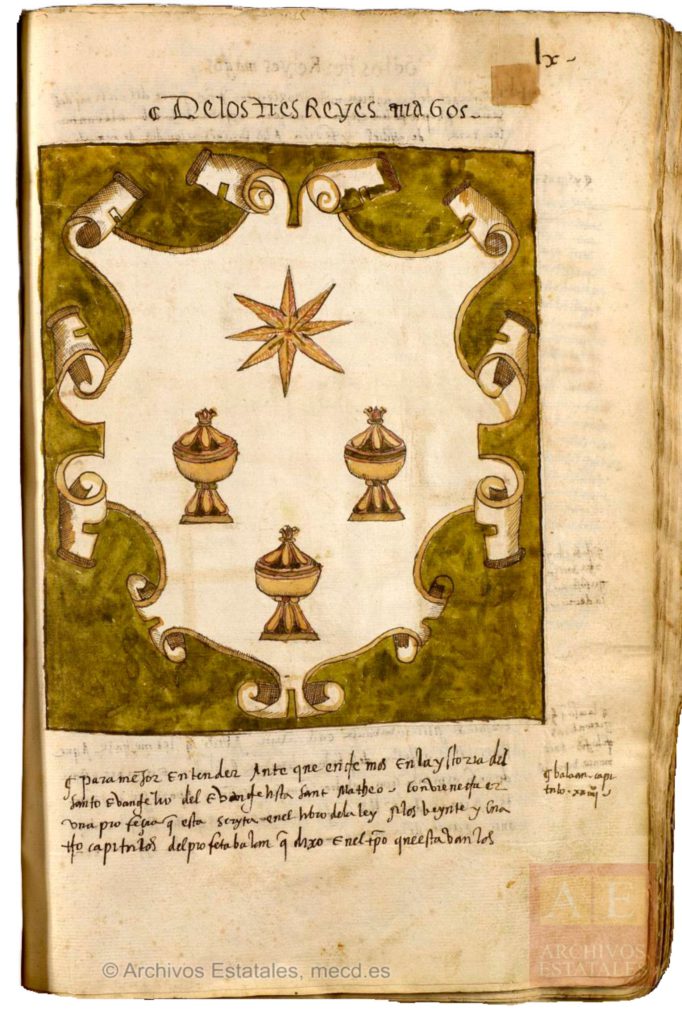
Finally, a curious and lesser-known image. The growing popularity of the Magi led, toward the end of the Middle Ages, some illustrators to invent coats of arms for the Magi. Thanks to a treatise preserved in the Historical Archive of Nobility (see: AHNOB), we can learn about this tradition in the mid-16th century. In one of them, unsurprisingly, we see an eight-pointed star (3).
Notes
(1) Ràfols, Josep F.: Antoni Gaudí (1852-1926), Ed. Canosa, Barcelona, 1928, p. 75. Catalan edition: 1928; Spanish edition: 1929.
(2) Bergós Massó, Joan. “Torre señorial de Bellesguard (1900-1902)”. Antoni Gaudí, the man and the work. 1st ed. Barcelona: Ariel, 1954, p. 98.
(3) It should be noted that some of these coats of arms show stars with six or seven points, perhaps reflecting changes in the representation of this symbol from the late Middle Ages to the early Renaissance.