March 27, 2026
By: Ferran Garcés
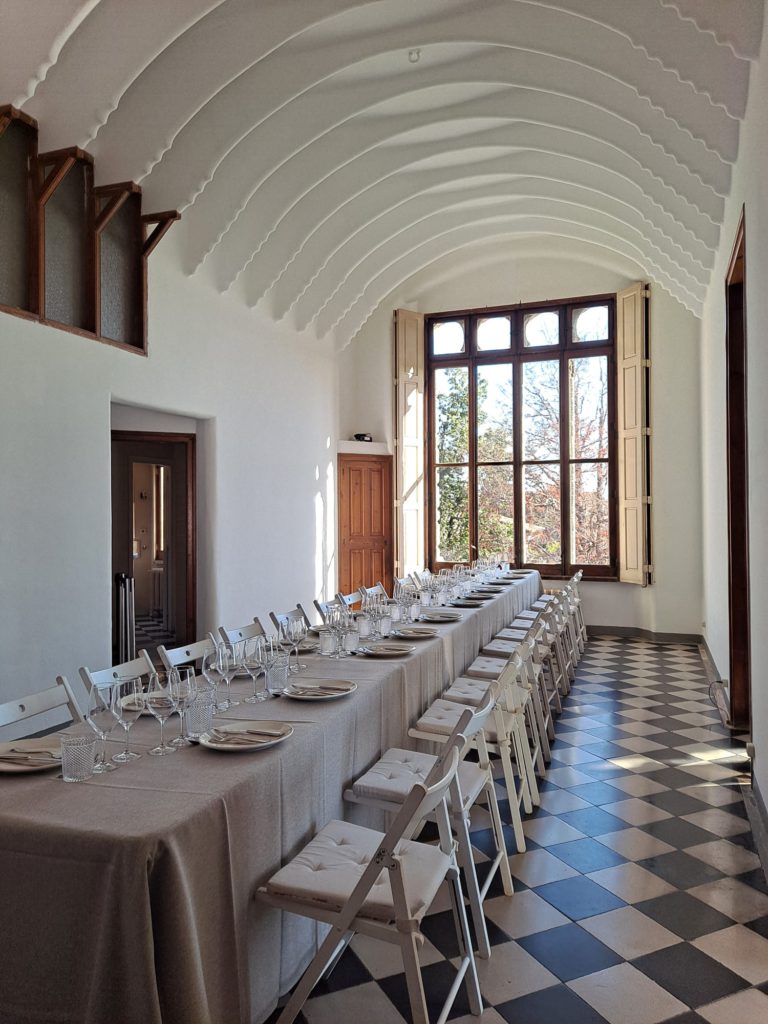
Yesterday, a dinner was held on the second floor of the house. In the photograph of the event we can see a new element and another with a long history. The new one is the ceiling with Gaudí’s characteristic organic shapes, made of plaster, a malleable material with the ability to adopt any form. The old one is the window at the end of the room. A window characteristic of Gothic architecture, although, as was to be expected, suitably personalized by Gaudí. The name of these windows is the same as that of the commander of an army, and this is no coincidence…
Colonel, coronelles…
Is there any relationship between the architectural term coronella and the military term colonel? The answer is yes. We open Coromines’ etymological dictionary and find the explanation: the name of column “took on an important military derivation in Italy, based on the idea of a column of troops: colonnello appears in this sense from Machiavelli (1527), and from there it came to designate the military officer who commands such a column.” The well-known linguist also mentions that the word colonel “appears for the first time in a letter written from Sicily (Palermo) by the Catalan N’Hug de Montcada in the year 1511, and from 1516 onwards in Castilian texts” (1). This would also be, incidentally, the origin of the name La Coronela, the armed force of the municipality of Barcelona during the War of the Reapers and the War of the Spanish Succession.
The difference lies in the column or columns…
Coronella windows enjoyed their best period between the 13th and 15th centuries. They are narrow, elongated openings divided by slender stone columns that support arches, generally semicircular, although they may be of more elaborate types. If the window has two sections it is called a “bifora”, and if there are three, a “trifora”. Exceptionally, there may be more columns, but in any case, the dividing column or columns are called mullions. They can appear both on façades and on towers, as well as in both Christian and Muslim buildings (“ajimez”, the term used in Spanish to designate these windows, is of Arabic origin and means “that which is exposed to the sun”). Below we show three medieval examples and, subsequently, some of those used by Gaudí at Torre Bellesguard.
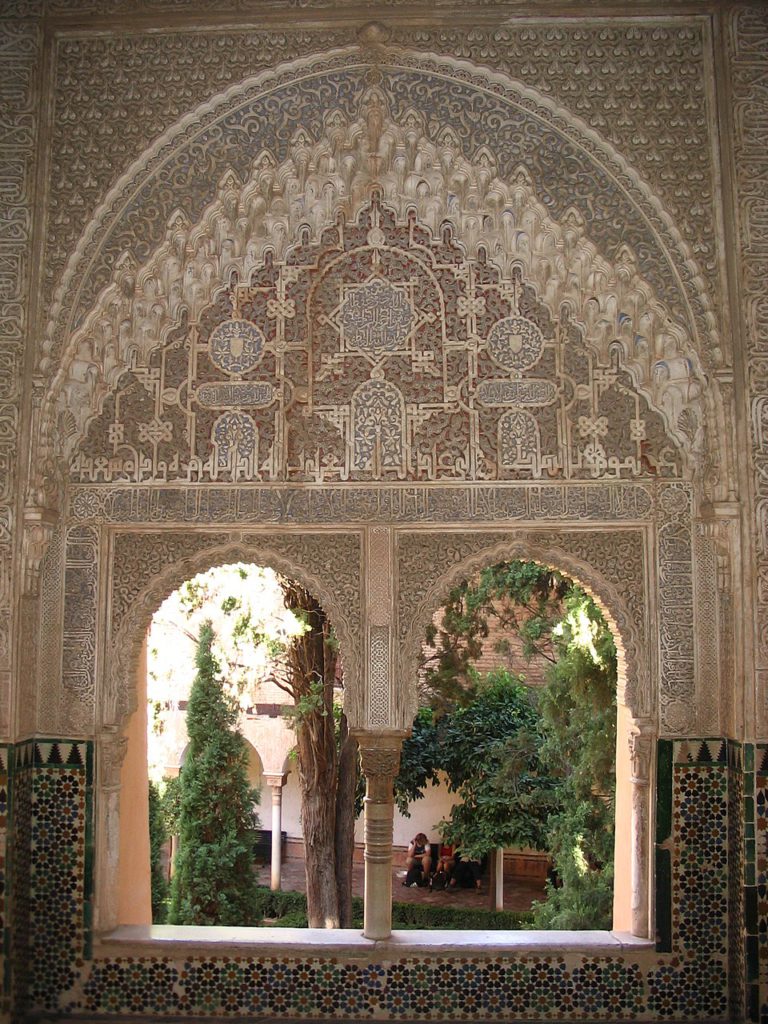
A Moorish bifora, at the Alhambra in Granada. Wikipedia
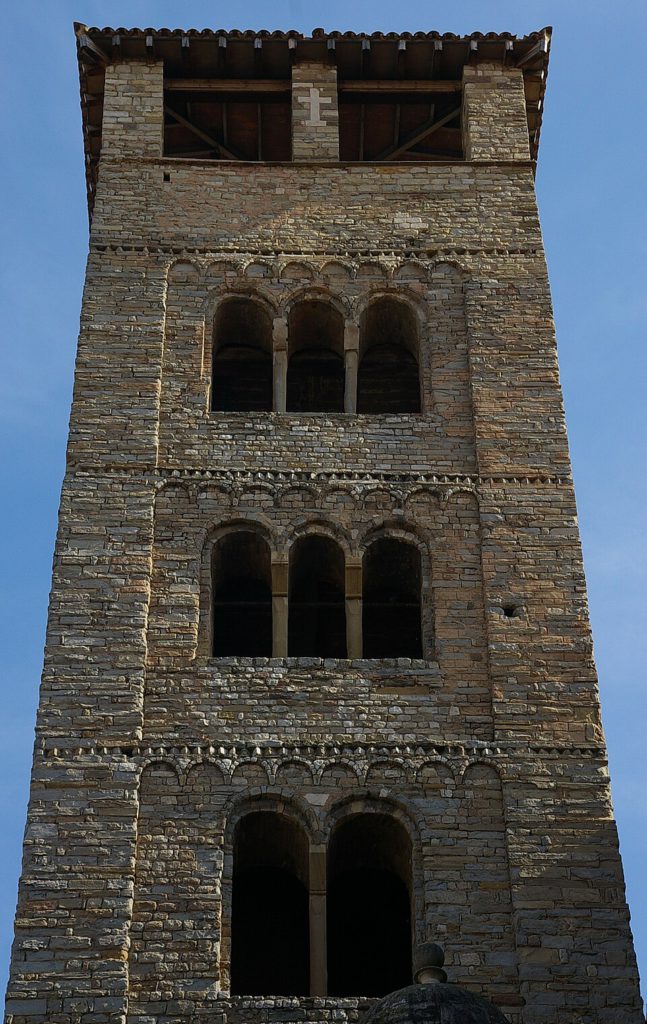
Romanesque triforas and biforas on the bell tower of Vic Cathedral (Osona). Wikipedia
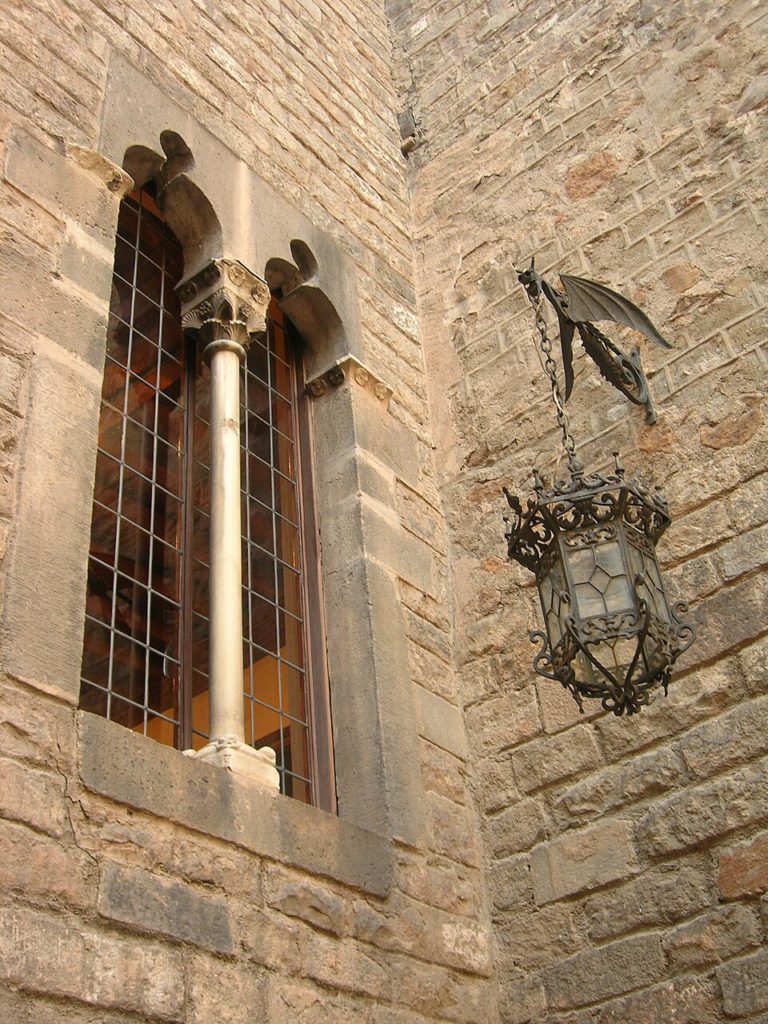
Coronella on the Gothic façade of the City Hall (Barcelona). Wikipedia.
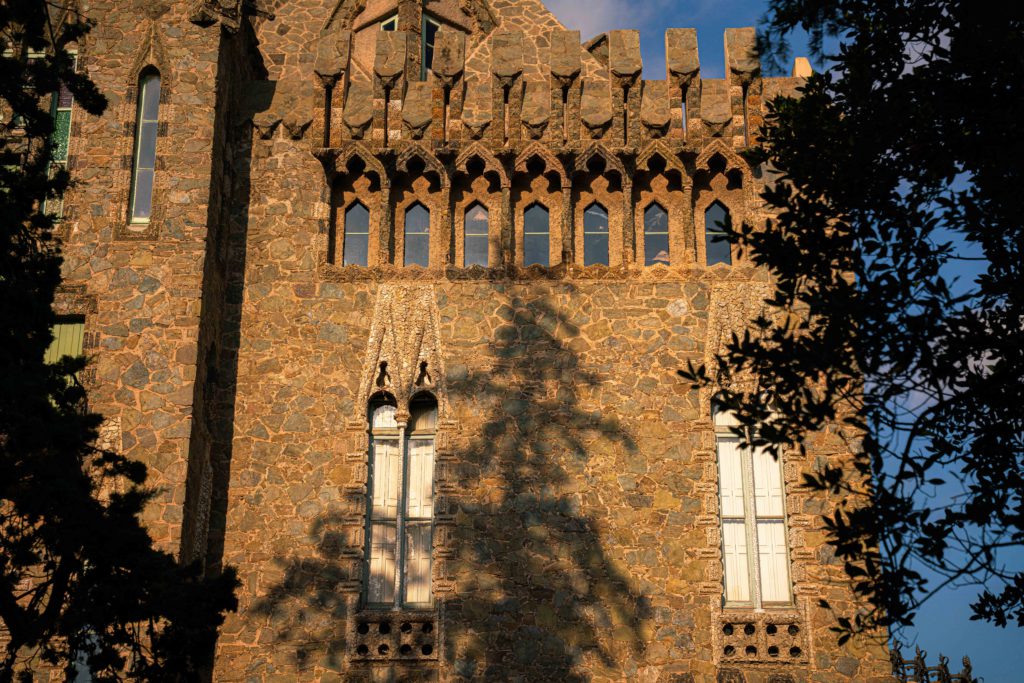 The window of a throne, the throne for a cathedral
Documented from 1320 onwards, the Corpus Christi procession of Barcelona is the oldest in Spain and one of the oldest in Europe. After the death of King Martin in 1410, his throne was used as the pedestal for the monstrance. Since then, during the Corpus procession, throne and monstrance have paraded through the streets of the Gothic Quarter of the county city.
Shortly before his death, in the year 1900, Jacint Verdaguer, the poet and friend of Gaudí, wrote a poem entitled The Monstrance of the Cathedral of Barcelona. It explains the making of the throne and the monstrance, as well as the tradition that associates them with King Martin’s stay at the old palace of Bellesguard. Curiously, that same year, Gaudí accepted the commission for Torre Bellesguard, a project that included the restoration of the few surviving ruins of that palace. On the other hand, Verdaguer wrote the poem from Vil·la Joana, a stately house very close to Bellesguard. Do you see the pair of coronelles at the lower part of the backrest of the throne? This is how Verdaguer describes them…
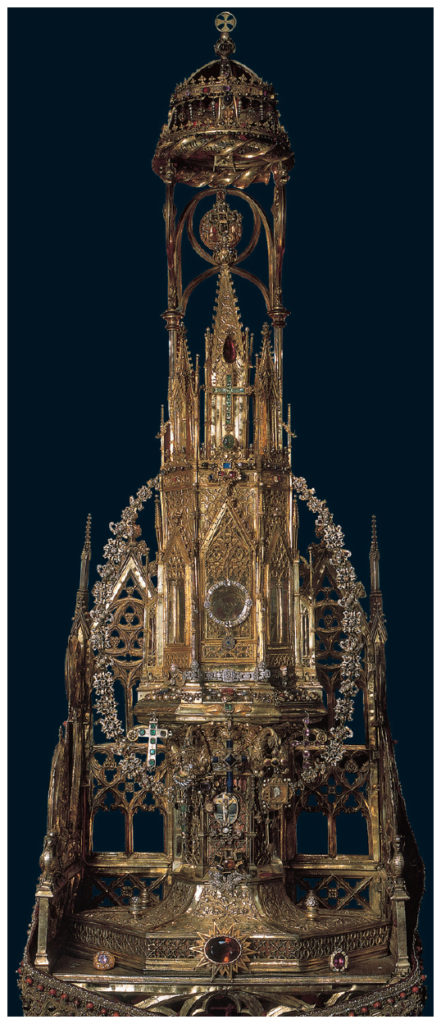 “It looks like a castle
Gothic, lofty, strong
and battlemented.
It has at each corner a turret
as a buttress,
which, as it grows, shoots up into an airy pinnacle.
If from outside it is a castle,
inside it seems a chapel:
in the middle of each side there opens
a graceful coronella window,
beautiful eyes
whose eyebrows
are delicate tracery” (2)
Notes
(1) Coromines, Joan (1987), Diccionari Etimològic i Complementari de la Llengua Catalana, vol. II, p. 843
Coromines, Joan, and Pascual, José Antonio (1980), Diccionario Crítico Etimológico Castellano e Hispánico, vol. II, p. 200
(2) Codina i Valls, Francesc (2006), Jacint Verdaguer. Barcelona. Texts for a Book, Eumo Editorial, Vic