January 22, 2026
By Ferran Garcés
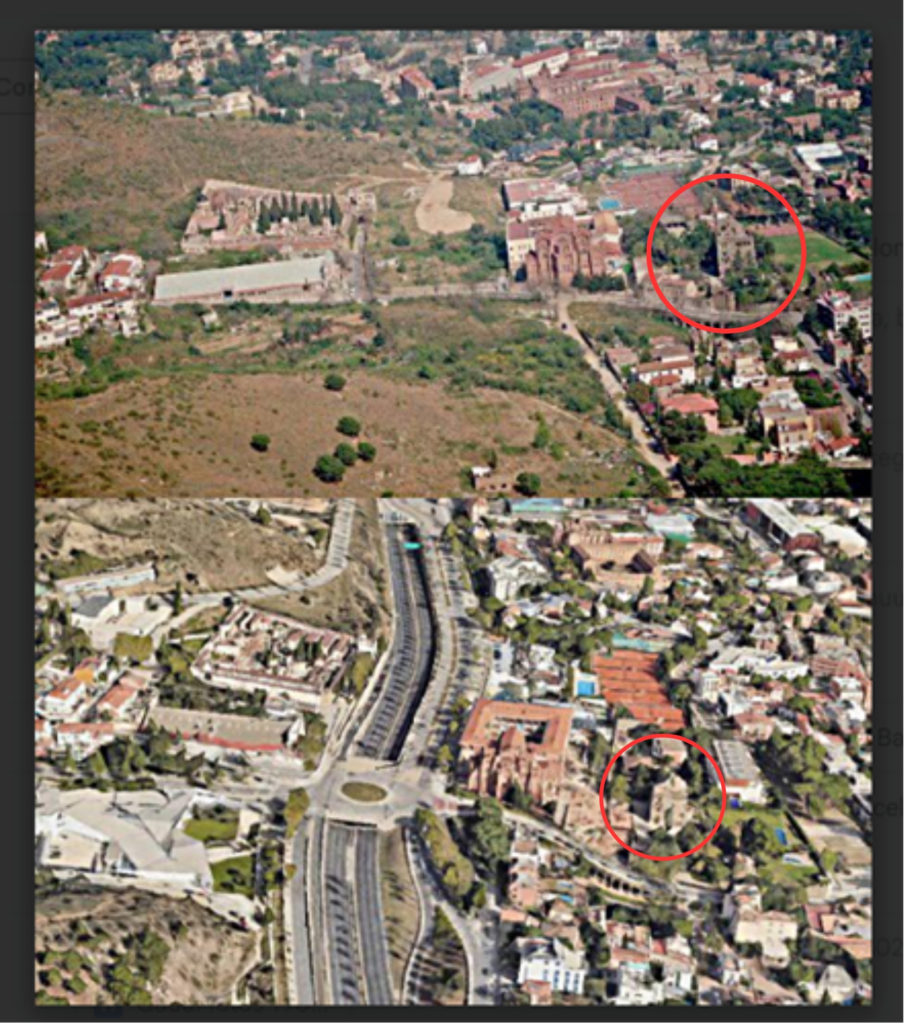
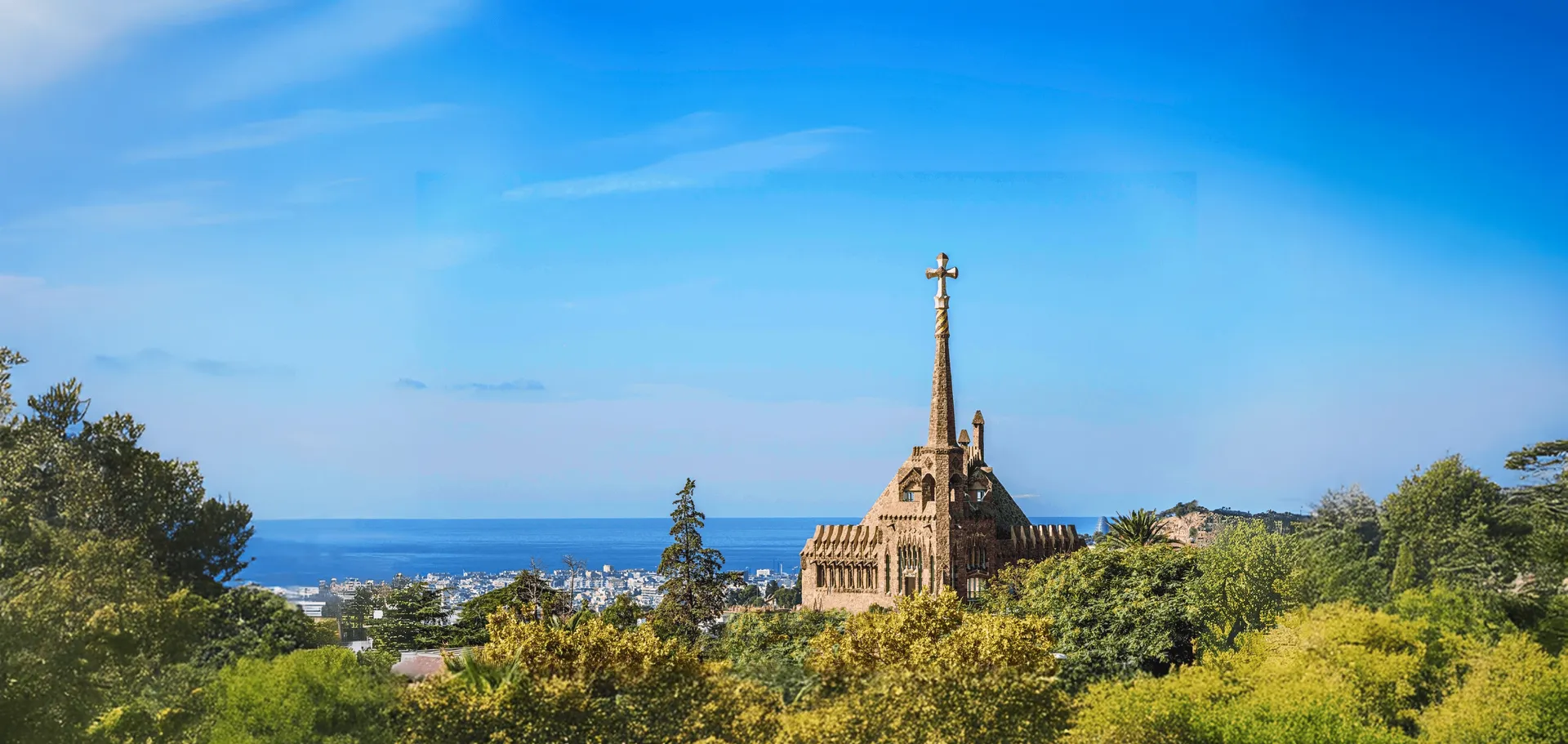
Torre Bellesguard is located at exit 7 of the B‑20, better known as the Ronda de Dalt, one of Barcelona’s major traffic arteries today…
This fast roadway runs along the foothills of the Collserola mountain range and connects with the Ronda Litoral, which stretches along the seafront. The full ring road circuit was inaugurated in 1992, on the occasion of the Olympic Games. However, the idea of building Barcelona’s ring roads dates back to the late 1960s, when the city began to suffer serious traffic problems. Nevertheless, construction works began in 1987. The objective was clear: to divert vehicles that did not need to enter the urban centre and to improve mobility. It was a key moment of urban transformation for Barcelona and, in particular, for the neighbourhoods located around the Collserola range. As expected, new buildings were soon constructed. The Bellesguard area would never be the same again. The images we share today bear clear witness to this.
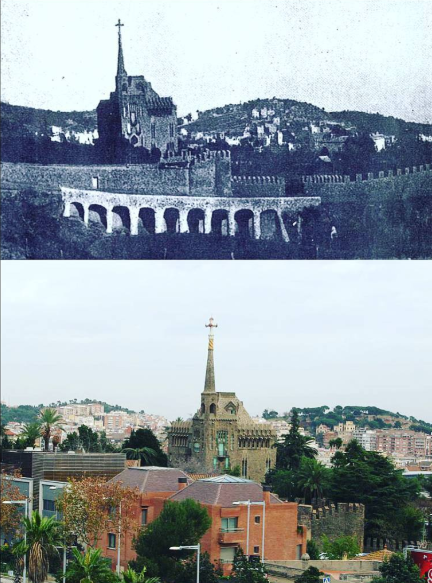
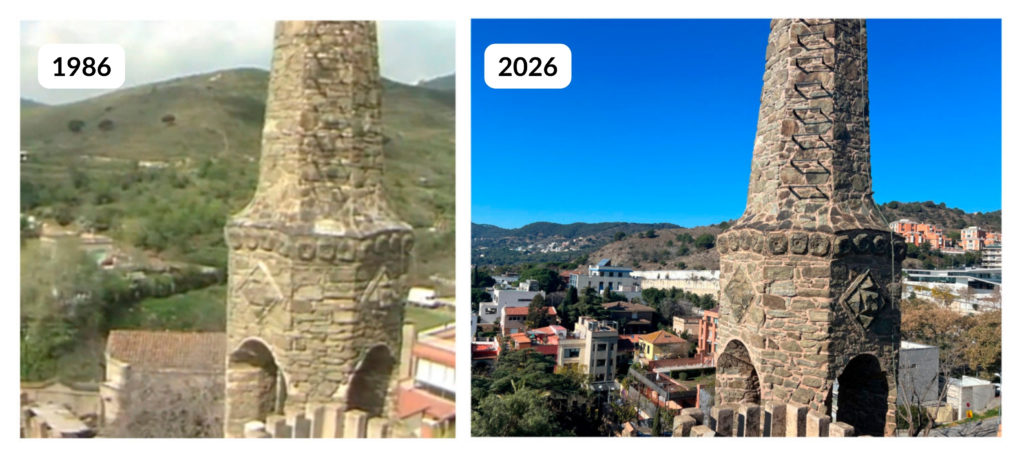
By chance or coincidence, one year before the start of the works on the Ronda de Dalt, that is, in 1986, the garden of Torre Bellesguard served as the setting for a classical music concert, thanks to the collaboration of the Guilera family, then the owners of the house. The concert was part of a programme entitled “Gaudí and Music”, produced by TVE Catalunya. It was broadcast on the second channel in 1987, the same year in which the landscape of Bellesguard was about to change forever. The following image was taken that day from the roof terrace of the house, looking towards the mountain (see: another landscape).
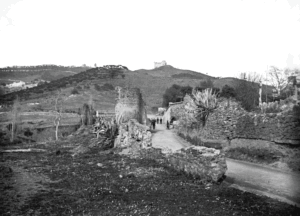
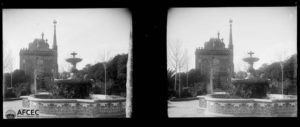
The new buildings, in addition to overshadowing Gaudí’s work, have limited one of the main effects that Gaudí took into account when designing it: the mimetism of the façade with the surrounding landscape. Look at the photograph from 1887: the “outer skin” of the tower‑castle is rough and green like the mountain. This is no coincidence: the stone used for the entire cladding of the building is original to the site.
It is said that, on site, in Gaudí’s time, there was a brigade of workers who, under the control of the architect himself, were responsible for classifying the slate by shades of colour, then breaking it into small pieces and finally combining them across the entire façade, in harmony with different geometric mouldings intended to embellish windows, cornices and, especially, the archivolts of the main doorway. In short, an original trencadís in the same colour as the mountain that surrounded the house, perfectly fusing architecture and nature. If Gaudí could see this today!