December 28, 2025
By Ferran Garcés
 The city of Barcelona is about to begin a very special year due to the celebration of the first anniversary of Antoni Gaudí’s death. In fact, the official inauguration was held on November 8 in Riudoms and Reus (see: The Gaudí Year 2026).
Ruiz Zafón, another great symbolic figure of Barcelona, said: “A story has no beginning or end, only doors of entry.” Today, in the last article of 2025, we will talk about one of those doors to welcome the coming year. It so happens that, moreover, it is the first visible imprint of Gaudí in the city. With it, his story begins. A gate featuring a large iron grille, like the many that later made his future houses so special, including those of Torre Bellesguard (see: Wrought Iron at Bellesguard). A gate full of surprises…
Reading the newspaper in 1880
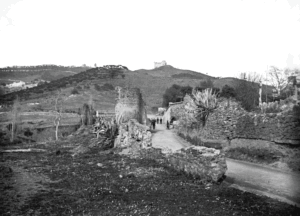
In 1880, two similarly named magazines were born in Barcelona: La Ilustració Catalana (1) and La Ilustración (2). One was written in Catalan and the other in Spanish. The engraving in the header photo belongs to the first magazine and shows one of Gaudí’s early works: the grille of the Ciutadella Park. He made it shortly after arriving in the city, when he was still a university student (see: Gaudí’s Houses, Ciutat Vella). By reading a couple of articles published in these magazines, today we will discover two surprises related to this preliminary work.
First surprise
In the year of publication, 1880, Gaudí was 28 years old and had graduated only two years earlier. It is therefore striking what an article published by La Ilustració Catalana on September 20, 1880 says (we transcribe the text with its original grammar):
“La gran reixa que dona volta al Parque y especial objecte de nostre gravat, fou ideada pel conegut arquitecte don Antoni Gaudí, imprimint especialment á les portes un sello marcat de singularitat y elegància” (3)
“By the well-known architect”… What had Gaudí done until then to deserve this description, given how recent his graduation was? Logically, the grille of Ciutadella Park, the protagonist of the article, and some street lamps for Plaça Reial and Pla de Palau. It is revealing that Gaudí began his professional career creating works of a public and urban character.
Moreover, among other projects, we could highlight two that, although they seem small, marked the beginning of two long and fruitful friendships. On one hand, the showcase for the Comella glove shop at the Paris Exhibition of 1878, now lost, but which helped Gaudí attract the attention of his main client, Count Güell. On the other hand, the altar for the chapel of the Jesús-María school in Tarragona, destroyed in 1936 and later rebuilt. This work was commissioned by Joan Grau, before being appointed bishop of Astorga and, as such, future promoter of the Episcopal Palace of that city in León. During this commission, the bishop also purchased the Bellesguard land. Later, Gaudí would build the tower that is now visited on those grounds. In short, we see that in two years Gaudí had already planted several seeds that would later earn him universal fame.
The second surprise
Now then, today we wanted to highlight a different fact. It is related to the same moment, 1880, and the same place, the grille of Ciutadella Park. The source comes from the other magazine born that year, namely La Ilustración. Specifically, on a day like today, December 26, 1880, this magazine published on its front page an article in which the author described the elegant atmosphere of the Ciutadella, then a novelty, and especially its ambiance at dusk…
«Do not think that love has completely disappeared from that place. Walk around the outside of the Park at those hours and you will see several enamored couples by the gate. The women, hands on hips, reproach the ungrateful suitor for his infidelities. The men, wearing the honorable uniform of the artillery corps, make tender protests and vows capable of melting the iron bars.» (4)
Josep Maria Tarragona, one of Gaudí’s main biographers, when speaking of this early work of the architect, reminds us: “The gates of Ciutadella Park were, during the 19th century, a tourist attraction. Photo collections and Barcelona guides in various languages reproduced them and recommended visiting them” (5). Unfortunately, the appeal of this work, as well as the curious custom of lovers around it, has been lost. Today it remains completely ignored. In any case, its existence shows how, from the very beginning, Gaudí’s works became symbols of Barcelona, as well as meeting and gathering places.
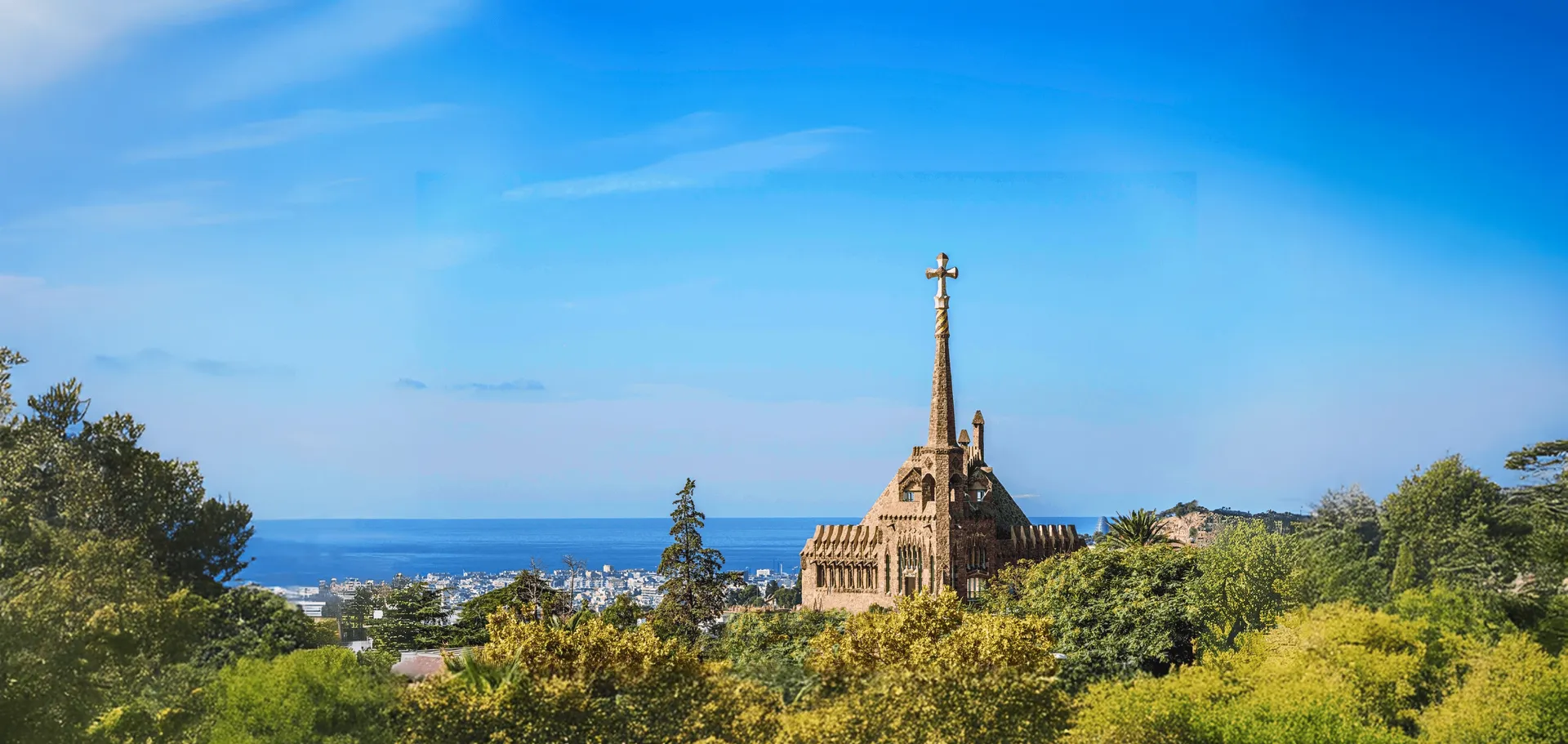
Fortunately, as we said at the beginning, the city of Barcelona is about to begin a very special year to rediscover Gaudí, due to the celebration of the first anniversary of his death. All the doors of his works will open to tell a story that is also that of Barcelona and the cities where he worked. Naturally, ours too (see: The Gates of Bellesguard). We look forward to seeing you! Merry Christmas and Happy Gaudí Year!
Notes
(1) Today we would write “ilustración,” but the original name of the magazine was “ilustració.”
(2) Do not confuse with another magazine with the same title published in Madrid between 1849 and 1857. The Barcelona one was published between 1880 and 1891.
(3) Editorial (20/9/1880) “Nostres gravats – Lo parque de Barcelona” La Ilustració Catalana, Vol. 1, p. 59. Source: BVPH (Virtual Library of Historical Press), Ministry of Culture of the Government of Spain (MC link).
(4) Jaumeandreu, José Juan (26/12/1880), “El parque” La Ilustración, Nº 8, Year 1, p. 58. Source: Digital Library, Museo del Prado (MP link).
(5) Tarragona, Josep Maria (22/2/2006), “La tanca i les portes de la Ciutadella (1876)” Blog Antoni Gaudí Organization.