February 13, 2026
By: Ferran Garcés
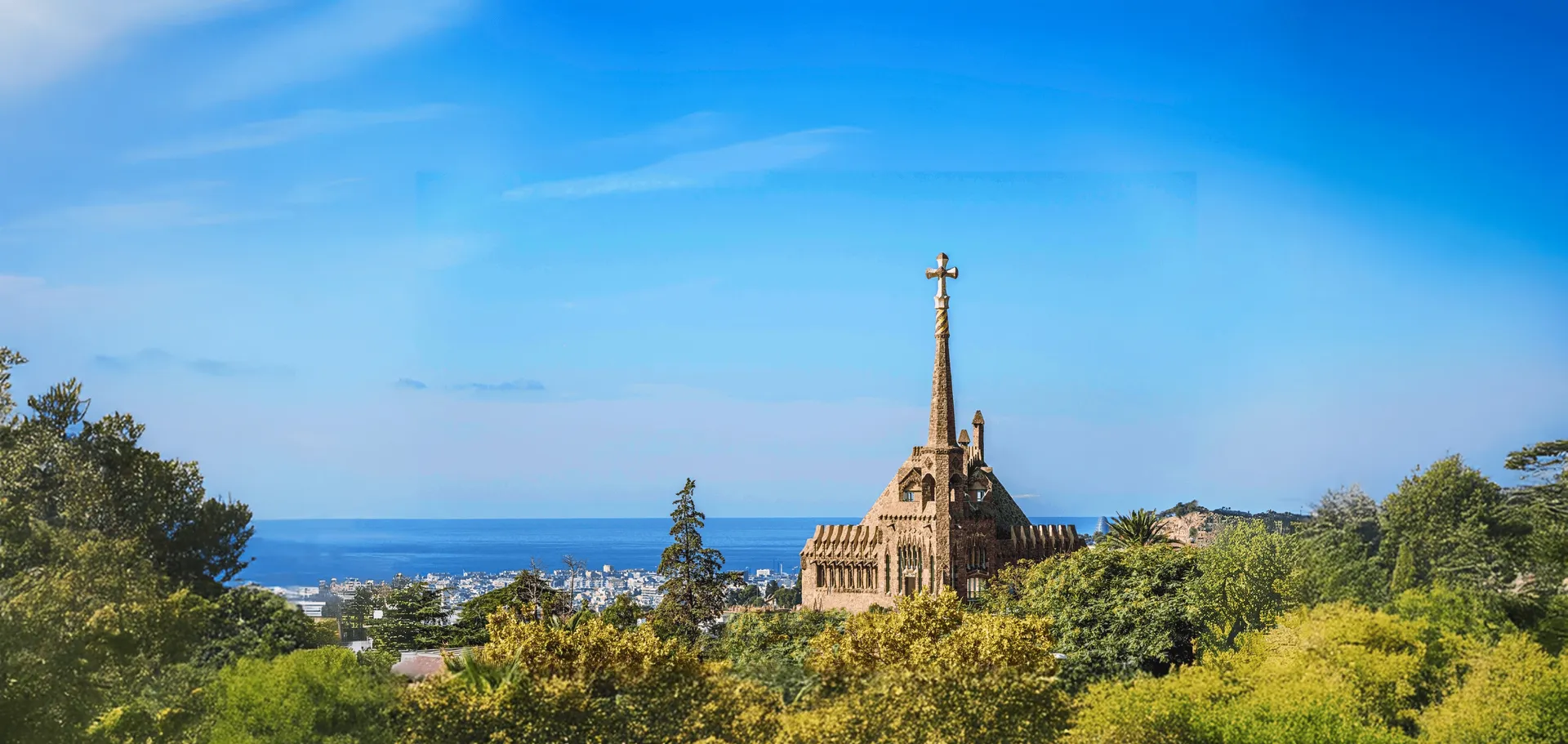
Barcelona has two major festivals. The summer one is La Mercè, and the winter one is dedicated to its other patron saint, Santa Eulalia. This year it will take place from February 12 to 15, and the celebration will bring together a whole series of activities around its two most significant spaces of memory. First, the Cathedral of Barcelona, where the saint’s tomb is kept along with the famous thirteen geese symbolizing the thirteen martyrdoms she suffered; and second, Baixada de Santa Eulalia Street, the setting of one of those torments. In fact, it is around these two spaces that the festival of Santa Eulalia will be celebrated.
By contrast, there will be little bustle in a third space, one with less memory: the place where the young martyr was born. Today, as in the past, this place, far from the city center, has always been a quiet spot, but today, moreover, it is a forgotten place. Only a few indirect testimonies recall it. Let us get to know them, let us recover them!
The first is Santa Eulària: poemmet, a book by Jacint Verdaguer, published in 1889. In it, the poet refers to Santa Eulalia as “the maiden of the Desert” and adds:
When from the Desert the next day she went forth
She said she would return
To turn the forest of Sarrià into a garden;
That she would be your gardener,
Oh flowers of Bellesguart and Vallvidrera
The allusion to the flowers of Bellesguart ending in “t”, as it was spelled then, is explained by Verdaguer in other poems (see: a poetic garden). Now we hae to askk ourselves which is this desert to which the young saint, described as a gardener, wishes to return? Well, this peculiar place is—or rather, was—a space that the generation of Verdaguer and Gaudí was the last to see, though already greatly in ruins; the space where the legend begins, according to the legend itself…
A gardened desert
Various sources describe it as a paradisiacal environment. Why, then, is its name “Desert of Sarrià”? In the past, this was the word used to describe convents located in uninhabited places in remembrance of hermits, such as Saint Jerome, who had retreated into deserts to lead a meditative life. However, these places, far from cities, were usually surrounded, as Verdaguer writes, by “woods” and “gardens.” That of Sarrià seems to have been especially picturesque (1).
In this “desert,” cradle of the young saint, a chapel was built in 1463, and around it grew a convent dedicated to her, which was active between 1578 and 1835. It was run by Capuchin friars. The landscape must have been magnificent. It is said to have been surrounded by fields and “a mystical garden full of trees and clay figures alluding to human fragility and the greatness of the spirit” (2). The following engraving gives an idea of the peace of that picturesque setting.
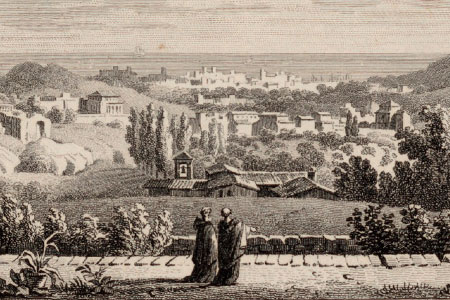
“Convent of Santa Eulalia, views from the Desert of Sarrià.” Engraving published in the book: Voyage Pittoresque et Historique en Espagne (1806–1820), by Alexandre de Laborde. Historical Archive of the City of Barcelona.
Today, the existence of that convent is recalled only by the name of a couple of urban roads, Desert Street and Santa Eulalia Promenade, as well as a residence for the elderly called the Desert of Sarrià Institute. The residence has a welcoming little garden, but nothing compared to the splendor of the “mystical garden” of the past. As we were saying, although already in ruins, the last Barcelonians to see it were the generation of Gaudí and Verdaguer. The poet, in fact, died very close to it, in Vil·la Joana, a stately home now converted into the present-day Verdaguer Museum. The following photograph dates from that time.
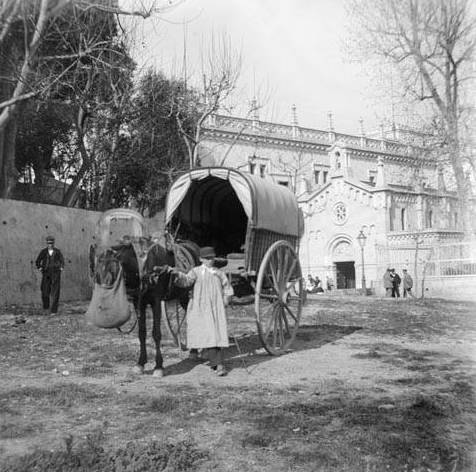
“A horse-drawn cart and a child in front of the chapel of Santa Eulalia of the Desert of Sarrià, now disappeared.” Frederic Bordas i Altarriba (1897), source: AFCEC
Sor Eulària, the protector of Pedralbes
In Gaudí’s time, many medieval buildings were in a state of serious decay. Some, such as that of Santa Eulalia in the Desert of Sarrià, had their days numbered. By contrast, that of Pedralbes would survive. Its savior was Mercè Anzizu i Vila (1868–1916), an orphaned young woman raised by her uncle, Eusebi Güell (1846–1918), the well-known patron of Gaudí. Since Verdaguer was part of the count’s family circle, the poet met the young woman during some of his stays with the Güell family. Later, she, like Verdaguer, became a nun and a poet. The two then established a heartfelt friendship, of which letters and poems are preserved (3). In the following photograph we can see the young woman before entering the convent.
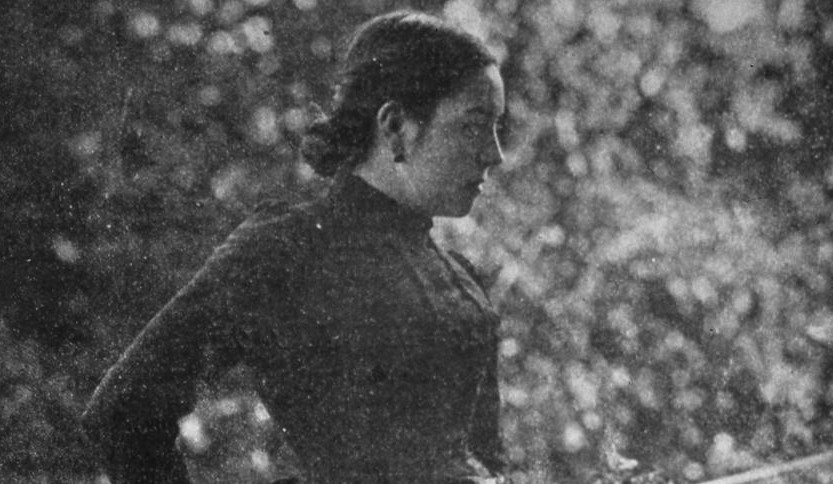
In 1889, the same year that Verdaguer published his book on Santa Eulària, as he calls her, Mercè, at just 20 years of age, entered the monastery of Pedralbes, where she would die in 1916, at the age of 48. As a religious woman she chose the name Sor Eulària Anzizu and became the first archivist and historian of the monastery. One of her books is titled Santa Eulària of Barcelona. Virgin and Martyr (1911). Furthermore, the niece of Count Güell donated all her wealth to the community of sisters in order to restore their new home. The architect chosen was Joan Martorell i Montells (1833–1906), one of the professors with whom Gaudí had worked when he was still a student and the person who, once Gaudí had graduated, recommended him to the board of the Sagrada Familia. Next we will speak of a couple of projects developed years later, when Gaudí was already an established architect. Once again, the name of Santa Eulalia is associated with them.
The unfinished chalet on the former Santa Eulalia Street
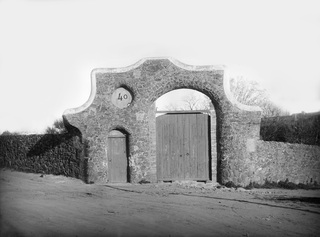
In 1904, while building Torre Bellesguard, Gaudí began the Graner chalet, commissioned by Lluís Graner i Arrufí, a painter friend of his and an entrepreneur in the world of entertainment (see: the vanished neighbor). The chalet was to be located opposite the Piarist Schools, on Santa Eulalia Street, no. 40, now called Immaculada Street, nos. 44–46. This means a five-minute walk from Torre Bellesguard. Unfortunately, due to the painter’s financial problems, the architect was only able to build the gate, which included three doorways, the smallest of which was for birds.
A never-built bridge dedicated to Santa Eulalia
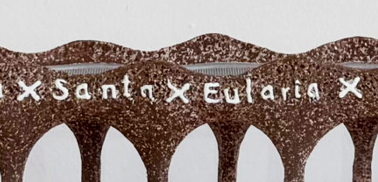
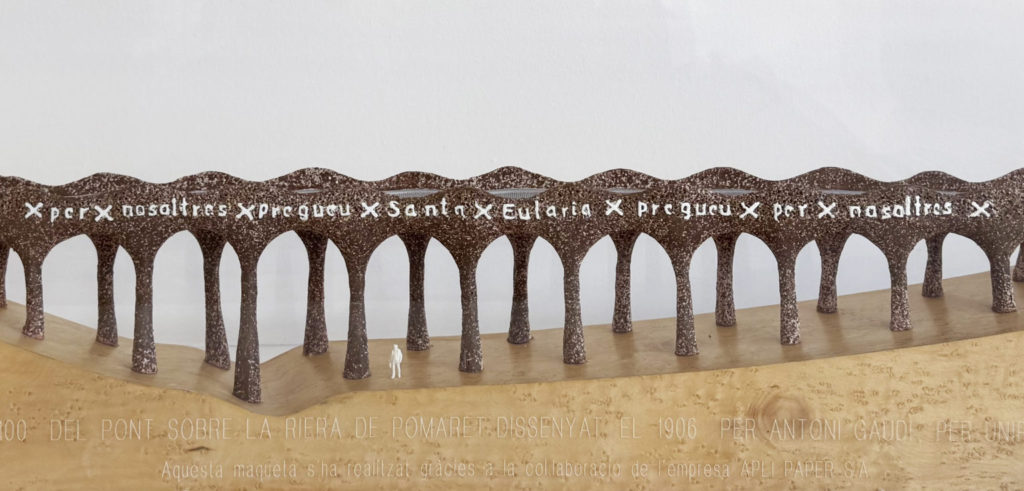
Finally, in 1906, Lluís Graner, together with other neighbors, commissioned Gaudí to design the Pomaret Bridge, which, like so many other projects by Gaudí, was never carried out. Had it been built, this bridge would have been, like the chalet on Santa Eulalia Street, very close to Torre Bellesguard (see: Gaudí, engineer and urban planner). It was to be an immense bridge, with columns 15 meters high. One of its singular features was the prayer that was to run across its entire upper surface: “Pray for us, pray for us.” Numerous crosses of Santa Eulalia, interspersed between each word, would have accompanied the prayer.
Notes
(1) Editorial staff (consulted on 9/02/2026), “Convent of the Capuchins of Sarrià,” Monestirs.cat
(2) Calpena i Marcos, Daria (2010), “Report on the surface survey and study of the impact on cultural heritage (archaeological, paleontological and architectural). Vallvidrera tunnel widening project,” Barcelona, p. 4
(3) Bernal Creus, M. C. (2013), “Jacint Verdaguer and Eulària Anzizu,” in: Eulària Anzizu. Poet, Archivist and Historian, Ed. Eumogràfic, Barcelona, pp. 107–119. See too: Aixalà i Fàbregas, C., Bernal i Creus, M. Carme, Castellano-Tresserra, A., (2018), Dones Silenciades. El llegat de Sor Eulària Anzizu (1868-1916) al Monestir de Pedralbes, Ajuntament de Barcelona.