March 6, 2026
By: Ferran Garcés
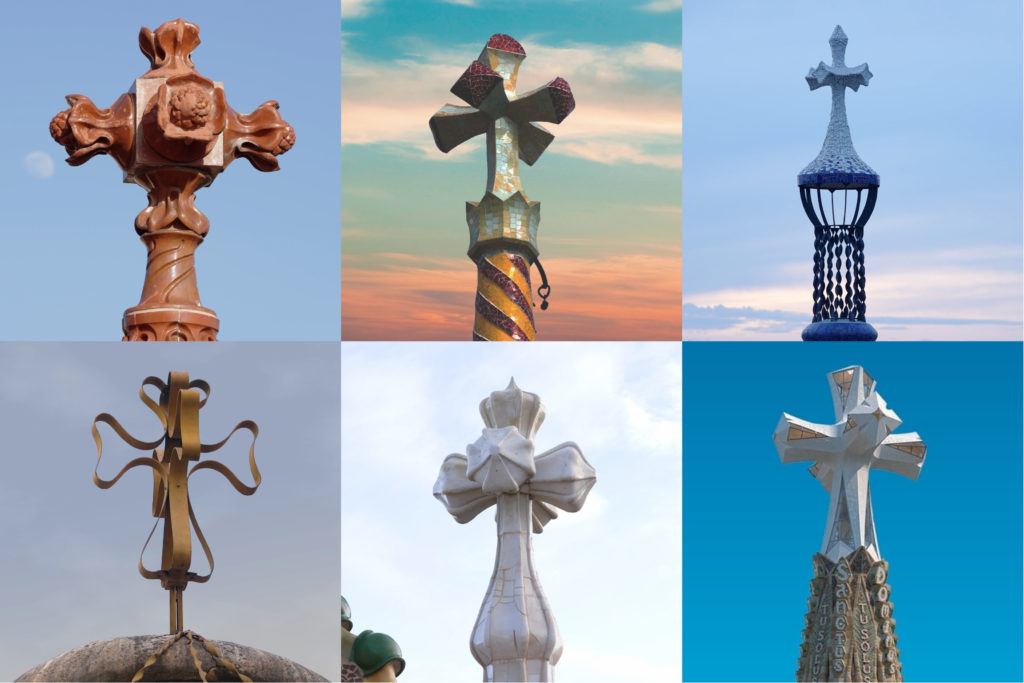
The four-armed cross is one of the most representative elements of Gaudí’s work, to the point that it is often referred to as the “Gaudí cross”. No other architect has a cross bearing his name. In a way, this cross represents a kind of signature — a signature written in the sky! However, contrary to popular belief, only a few of Gaudí’s buildings feature it. Which ones are they? Let’s find out!
Teresian College (1888–1890)
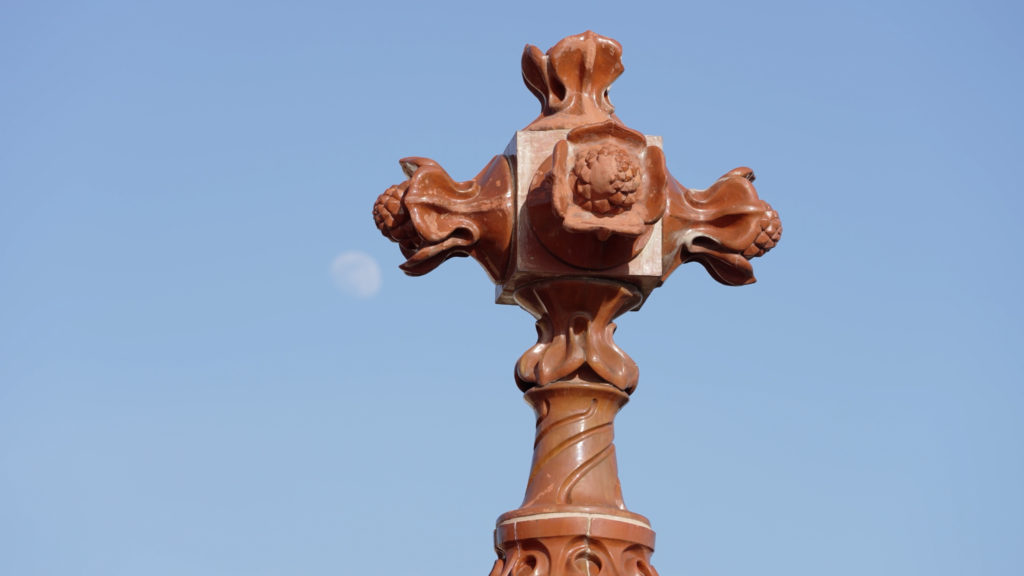
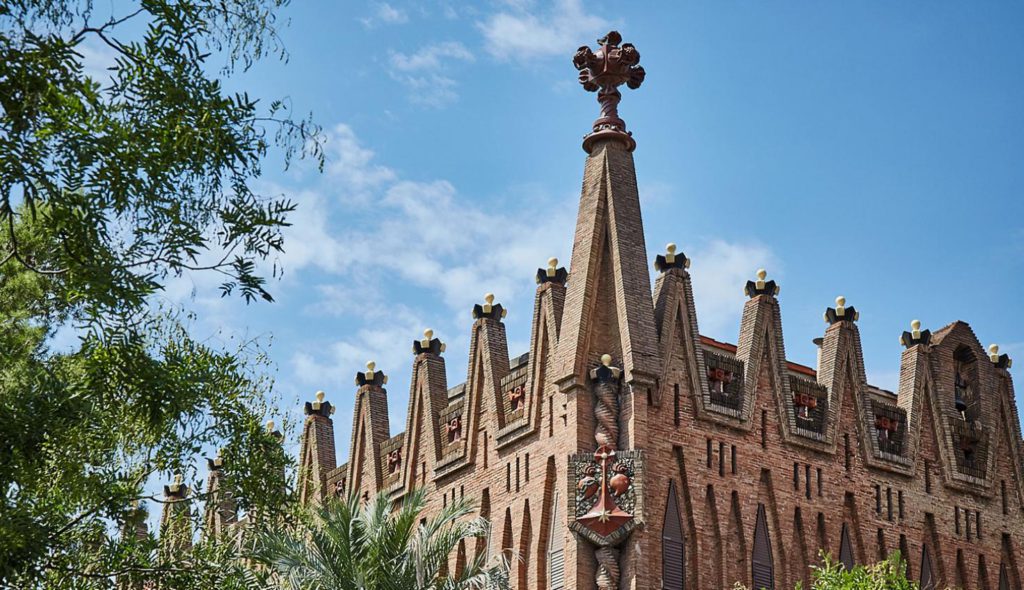
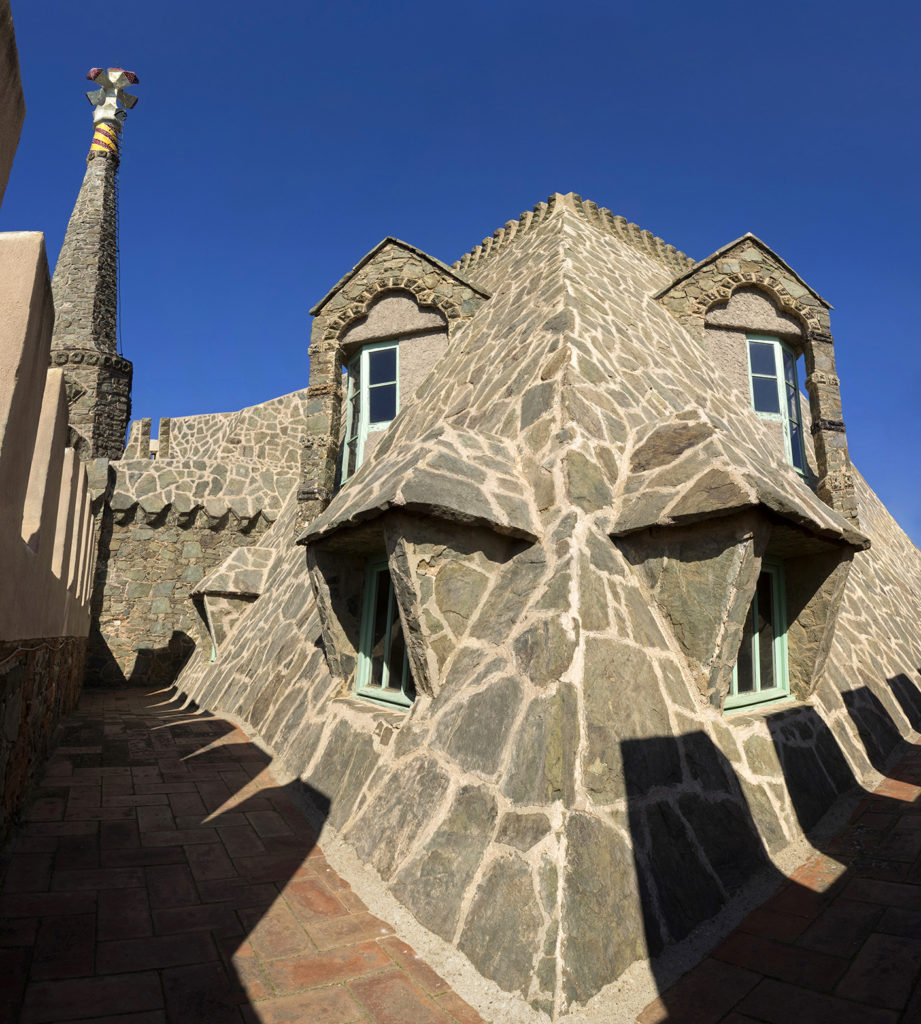
The debut took place on the rooftop of the Teresian College, built between 1888 and 1890. More precisely, we can see it at each of the four corners of the building, surrounded by battlements that refer to the “interior castle” of Saint Teresa of Jesus, the theologian who inspired the building.
At the end of each arm we can recognize the cone of a cypress tree, also known as a “galbulus”. This cone, or strobilus, a symbol of eternal life and faith, was the source of inspiration for the architect in shaping the cross, which rests on a small pinnacle and a helical column. One last curious detail: notice that here the cross is red and not white, as in the following buildings.
Torre Bellesguard (1901–1903)
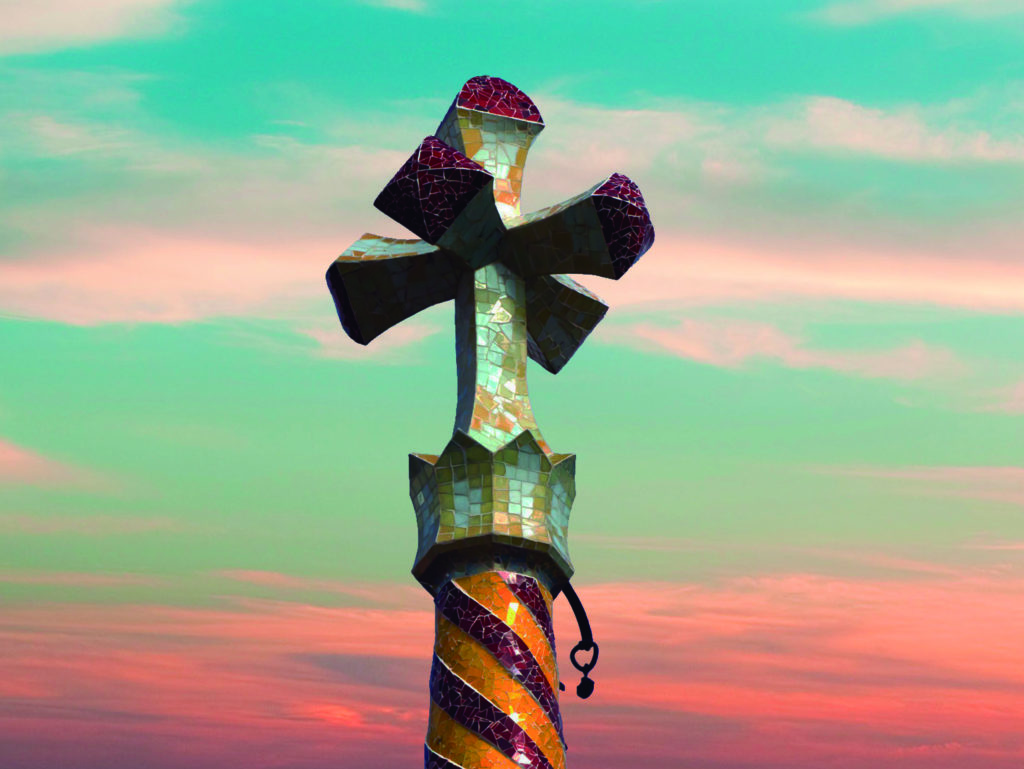
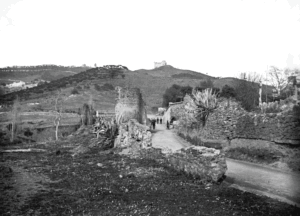
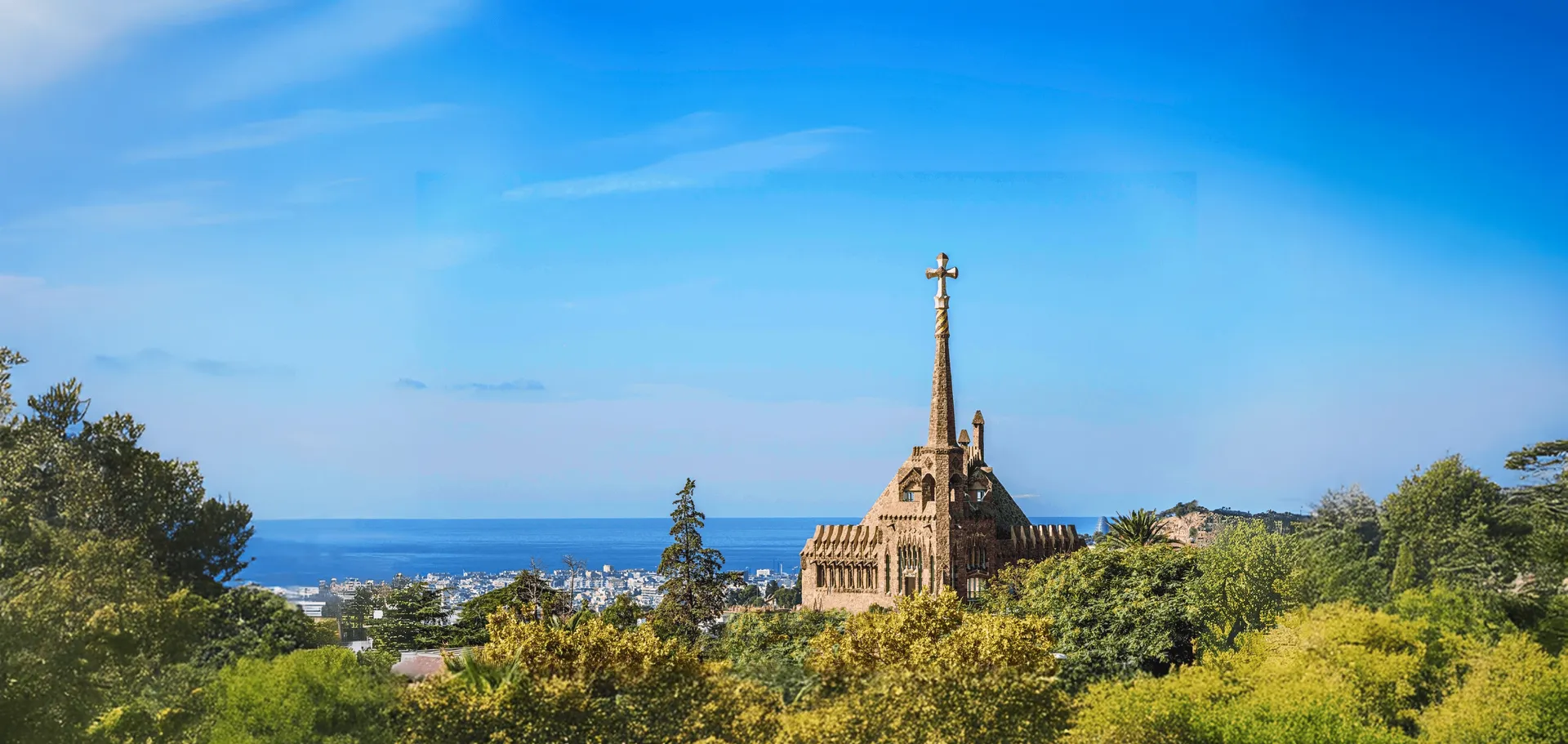
The second building with a four-pointed cross is very close to the previous one, in the Sarrià–Sant Gervasi District, and like it, it also takes on the appearance of a medieval castle, since Gaudí was inspired by the former Bellesguard castle built by King Martin I the Humane on the same site.
Here, the pinnacle is taller, and beneath the cross stand out two symbols that recall the chivalric past of the estate: the four bars of the House of Barcelona and the crown of the sovereign, the last monarch of this dynasty. There is no helical column, but the four bars are arranged following the same geometric pattern so that they can be seen from any angle.
As also at Casa Batlló, which we will mention shortly, this pinnacle has been interpreted as the hilt of Saint George’s sword slaying the dragon, represented on one of the corners of the attic, whose shape recalls the face of the fearsome beast (see: a legend made architecture). Torre Bellesguard is part of a project that was carried out between 1900 and 1909, but the main house was built between 1901 and 1903, that is, at the same time as the following cross…
Park Güell (1901–1903)
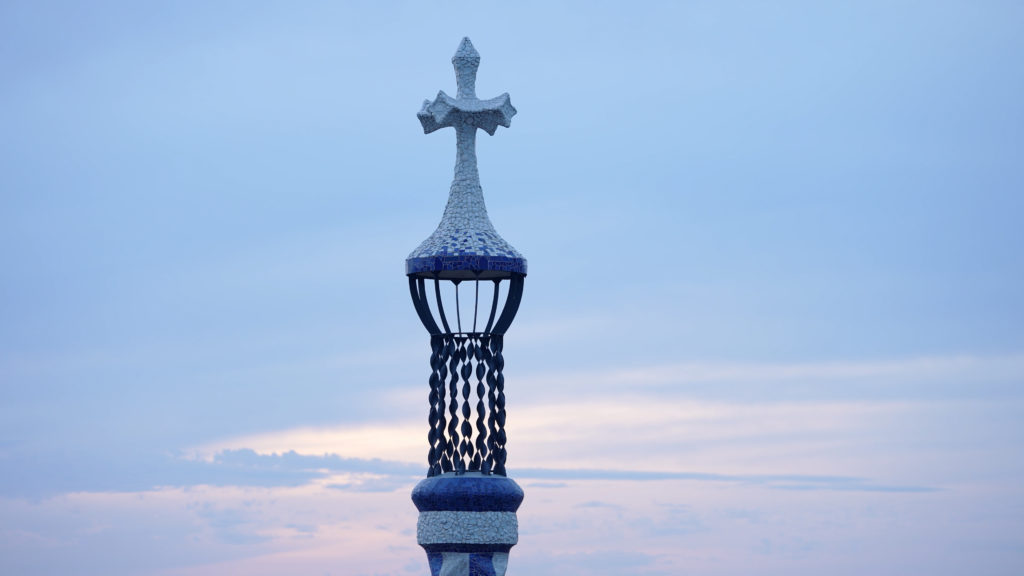
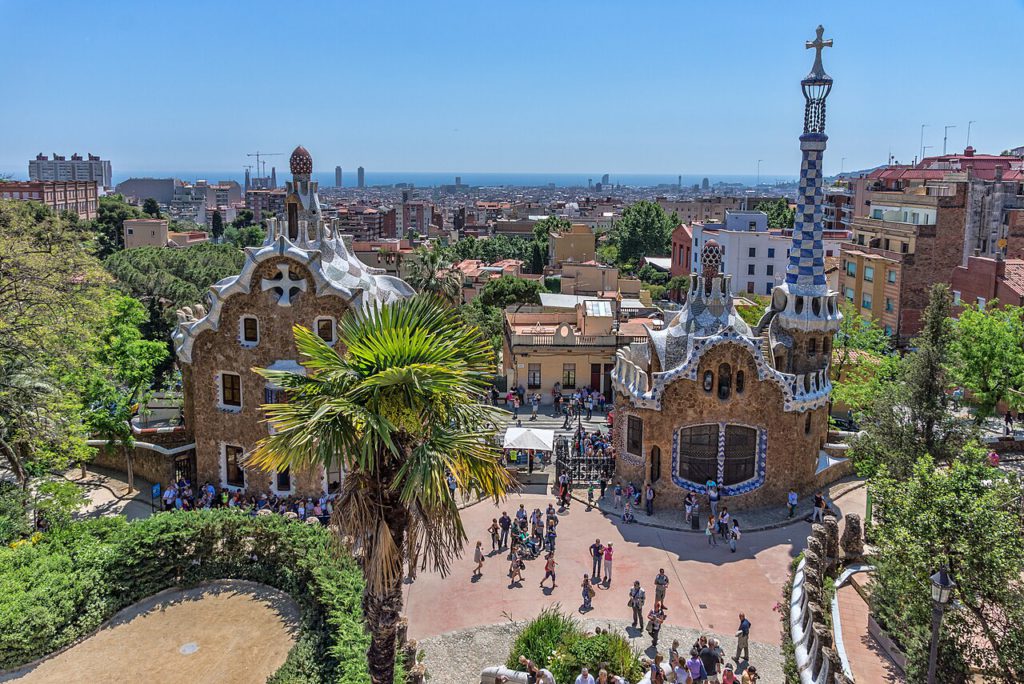
Indeed, the entrance to Park Güell is contemporary with the main house of Torre Bellesguard. It is made up of two pavilions that no longer recall a medieval castle, but rather the aesthetic for which Gaudí is best known: an architecture full of sinuous forms, movement and color. At the top of one of these pavilions stands a very tall spire crowned, once again, with the typical Gaudí cross. The blue and white decoration of the pinnacle has been interpreted as a reference to the flag of Bavaria, the German state where the composer Richard Wagner developed much of his musical production. Gaudí, like many other Barcelonans of his time, was a great admirer of his operas.
The gate of the Miralles Estate (1901)
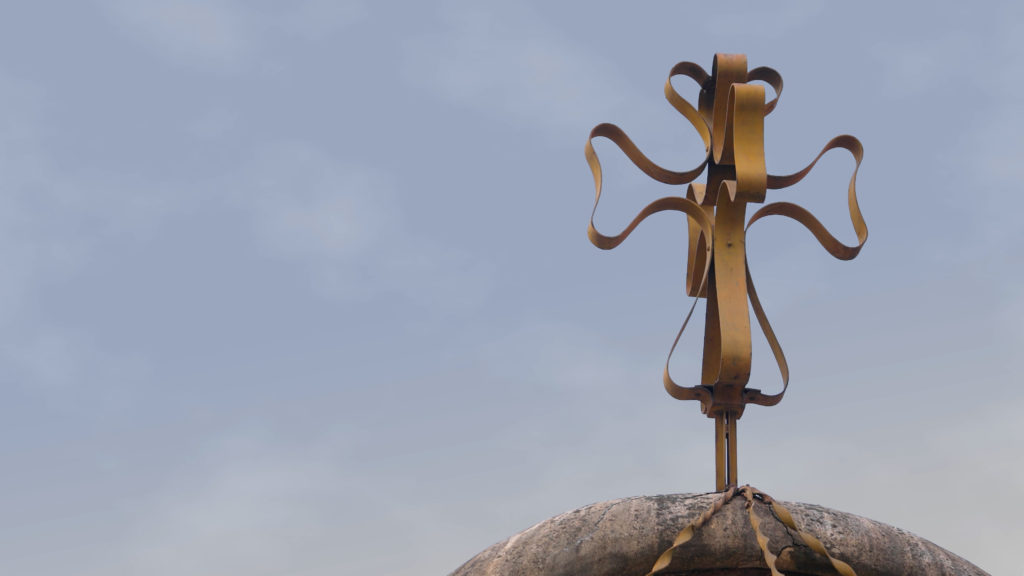
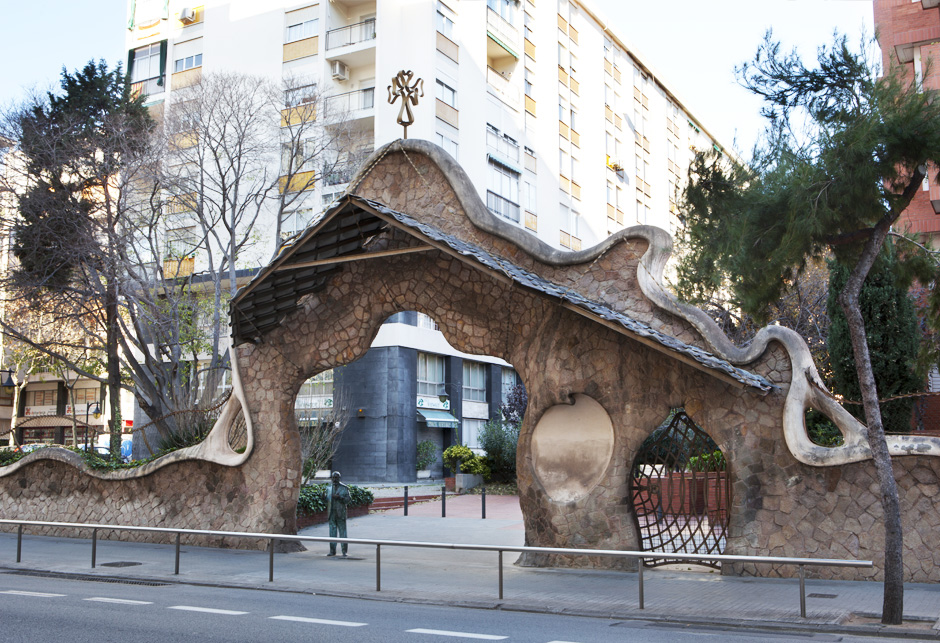
Ceramic and/or glass is the main material used by Gaudí in his crosses. There is one, however, that was made of wrought iron. It stands above the gateway of the entrance to a residence that has now disappeared. It is located in the Sarrià neighborhood, very close to the Teresian College and Torre Bellesguard. All of these buildings are located far from the center of Barcelona and are not visited by many tourists. They are therefore little-known works. The last crosses, by contrast, are in the Eixample, crowning two of Gaudí’s most popular works.
Casa Batlló (1904–1906)
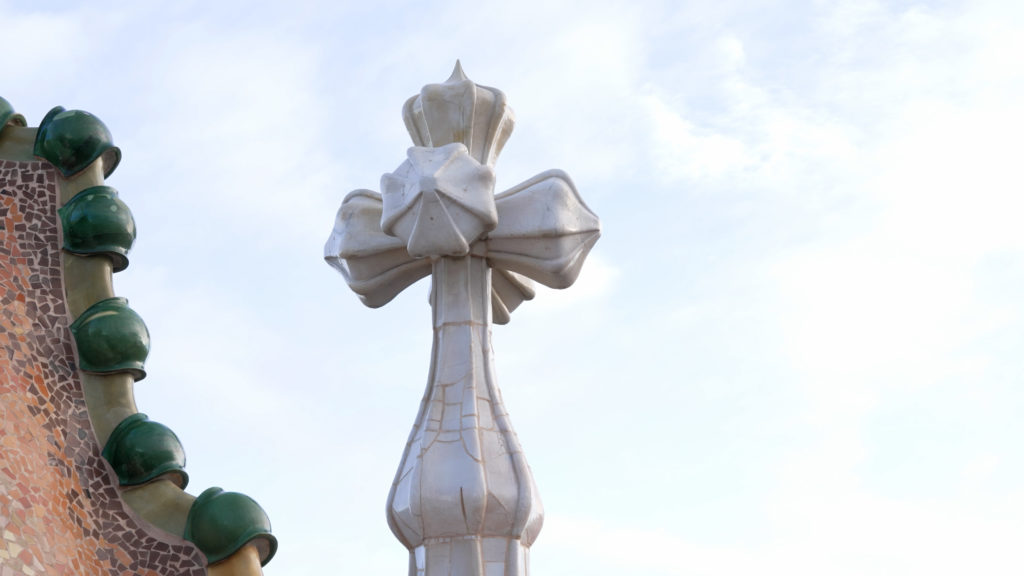
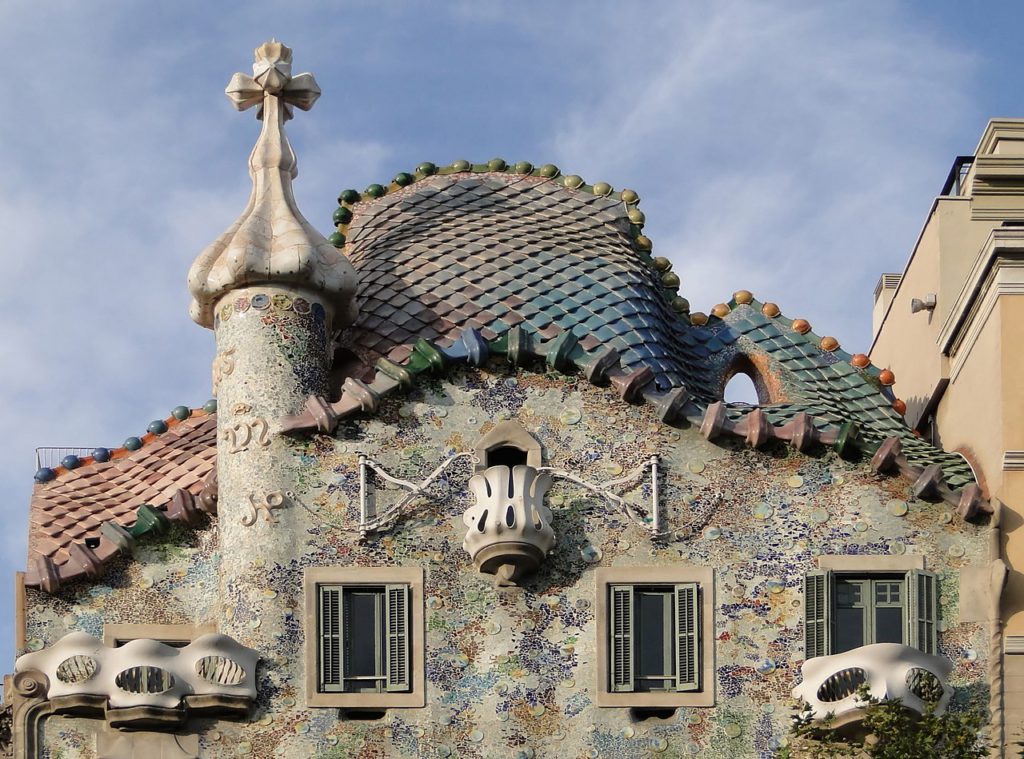
The four-armed cross of Casa Batlló is Gaudí’s first “signature in the sky” in the center of Barcelona. In this building, the pinnacle does not rise above the roof but is embedded in the upper part of the façade, which simulates the back of a dragon, so that the cross would represent, according to a popular interpretation, the hilt of Saint George’s sword.
On the wall of the column we can read the monograms of the Sagrada Família: JHS (“Iesus Hominum Salvator”, Jesus Savior of Men), M (Mary) and JP (Joseph). The cross, bulb-shaped, was made in Manacor (Mallorca). For a long time, this was the only Gaudí cross in the heart of the city. This year, however, it has company…
Sagrada Família (1883–2026)
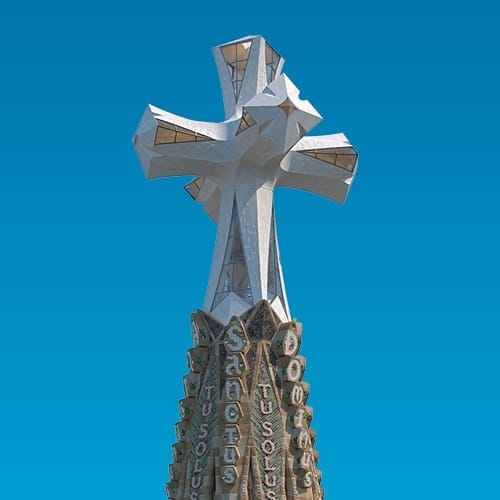
Gaudí took on the project of the Sagrada Família on November 3, 1883, that is, long before any of the buildings we have seen so far. However, the completion of his last four-pointed cross had to wait more than one hundred and forty years.
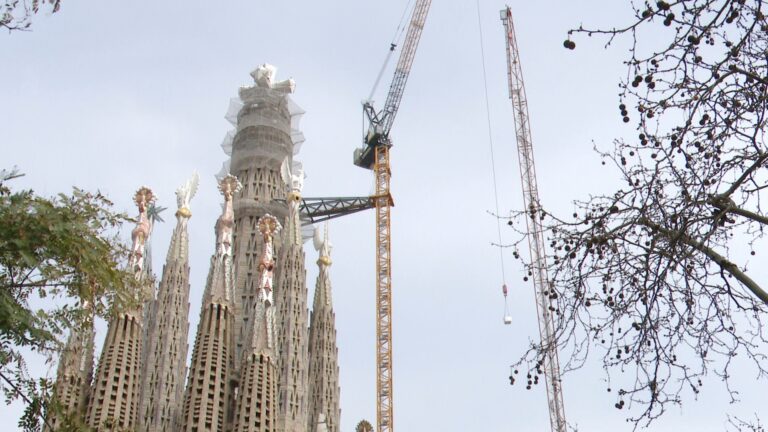
It stands atop the highest pinnacle of any of Gaudí’s buildings. In fact, since February 20 of this year, the Sagrada Família in Barcelona has been the tallest church in the world, at 172.5 meters, thanks to the four-pointed cross crowning the Tower of Jesus Christ. A height that does not exceed the 177 meters of Montjuïc mountain, thus respecting the natural limit that the architect considered “the work of God”. Not for nothing, at the base of the terminal of the tower appears the following inscription: «Tu solus Sanctus, tu solus Dominus, tu solus Altissimus» (‘You alone are the Holy One, you alone are the Lord, you alone are the Most High’)
This achievement does not imply the end of the temple, as the construction of the Glory façade is still pending — a highly controversial work due to the theoretical demolition of buildings required for its execution. However, this façade, if it is eventually completed, will make the temple wider, but not taller. From the point of view of verticality, the cross does indeed complete Gaudí’s original project. A cross born from the contemplation of the cypress, the tree that best suggests verticality and, as such, the search for the sky. On the other hand, its four arms represent the cardinal points, that is, the totality of the surrounding space. What better signature for an architect than this symbol?…