August 7, 2026
By Ferran Garcés
We are about to witness a historic eclipse. The last one took place on August 30, 1905. At Torre Bellesguard, we know that its owners also prepared to observe the eclipse, just as people did throughout Catalonia, Spain, and the rest of the world. Two years ago, we already wrote about this event (see: the 1905 eclipse). Today, however, we will explore it from a different perspective. Instead of looking up at the sky, we will turn our gaze toward the city. What was Barcelona like on that day when it was momentarily plunged into darkness in the middle of broad daylight?
The Eclipse on the Mountain
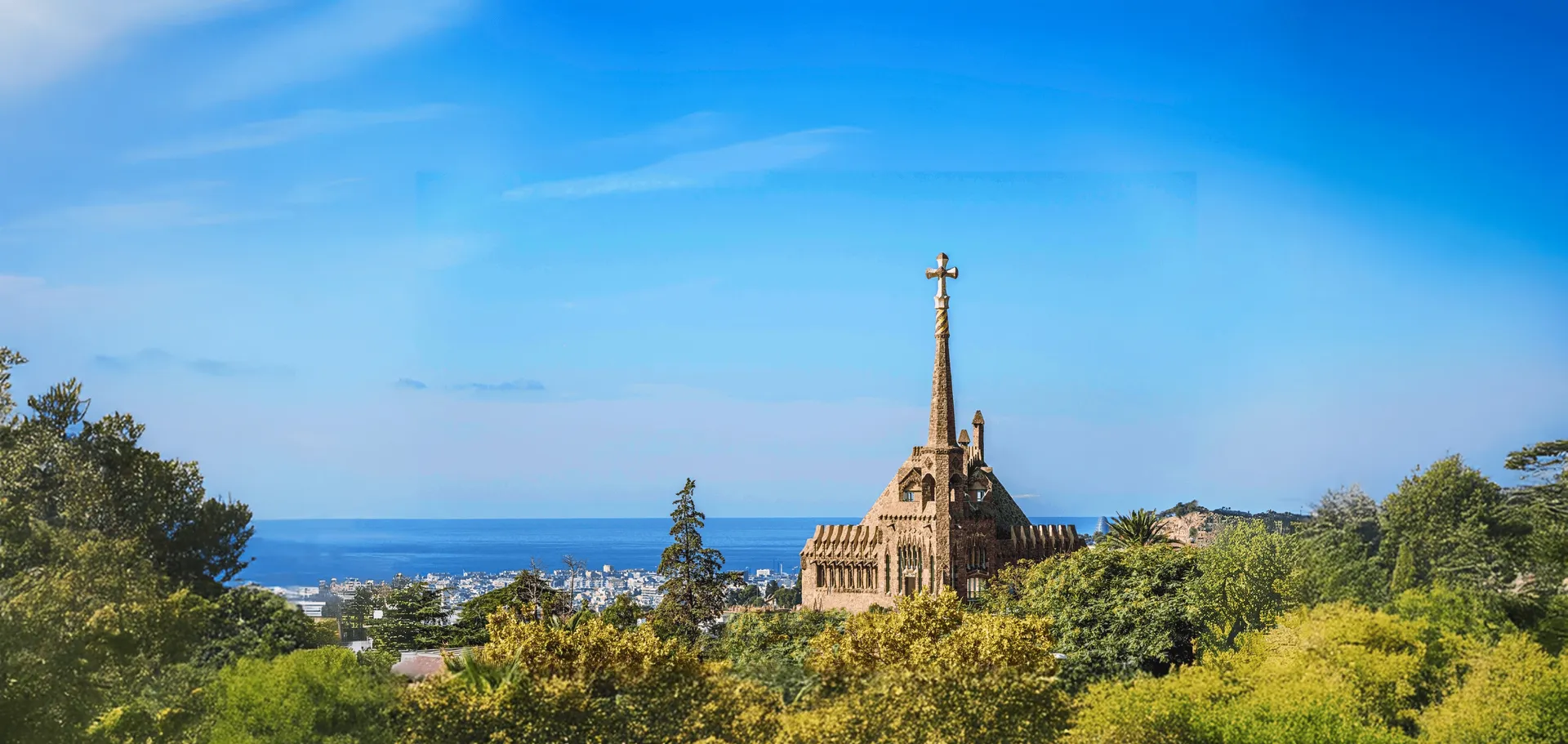
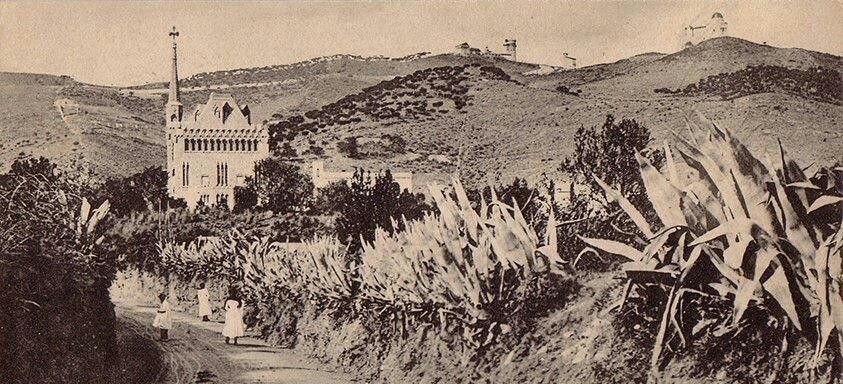
At Torre Bellesguard, Gaudí had already completed the first phase of construction, building the main house, but the viaduct and the garden barbican were still unfinished. These two elements were essential for protecting the ruins of the former palace of King Martin the Humane.
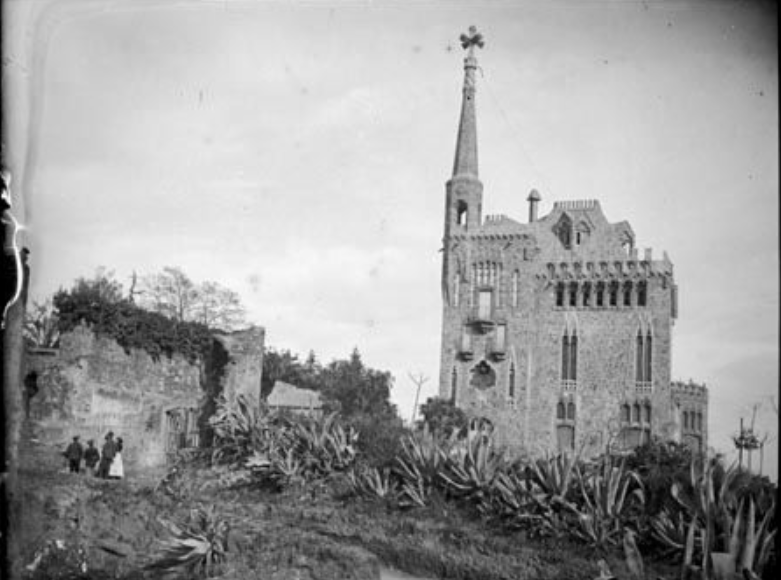 At that time, Bellesguard was merely a summer residence, surrounded by a landscape very different from the one we know today. The Fabra Observatory had been inaugurated around the same period, and in some photographs from the time, these two buildings were virtually the only structures visible in the area.
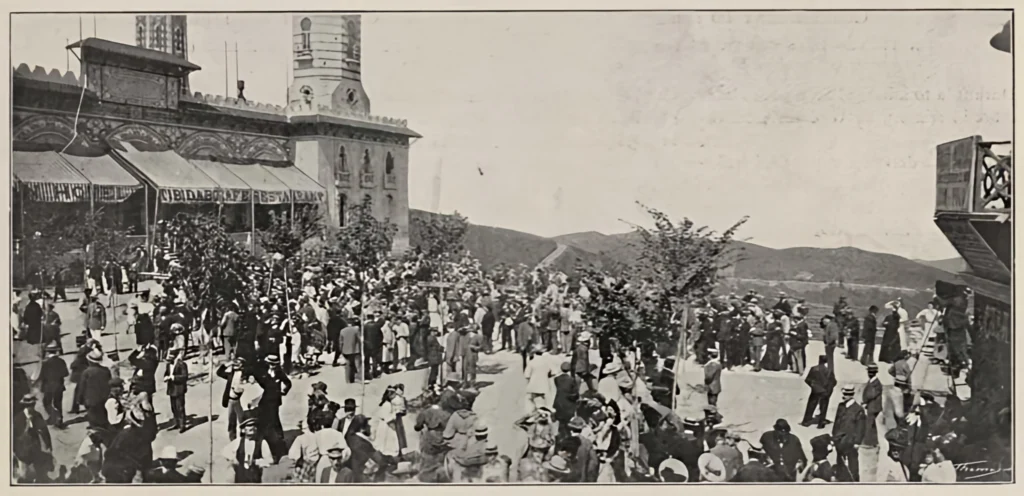
 The Tibidabo Amusement Park had also recently appeared on the scene. Its facilities were inaugurated in 1901, together with the Blue Tram and the Funicular Railway, although the first rides did not begin operating until 1905. In fact, on August 30, they served as the backdrop for eclipse viewing.
 The Eclipse in the City
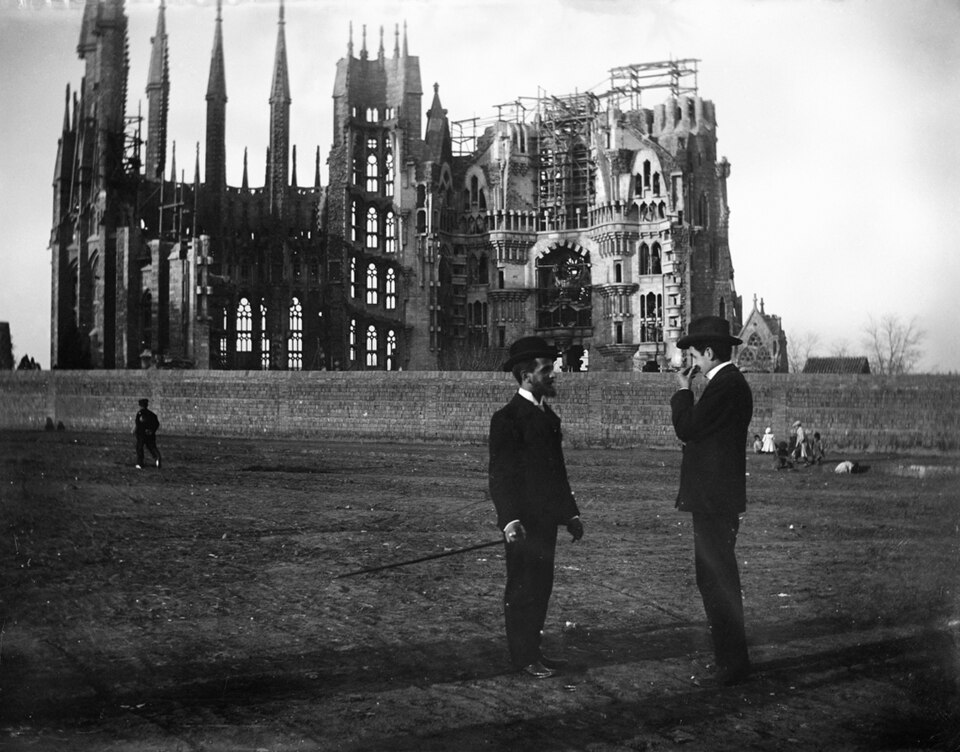
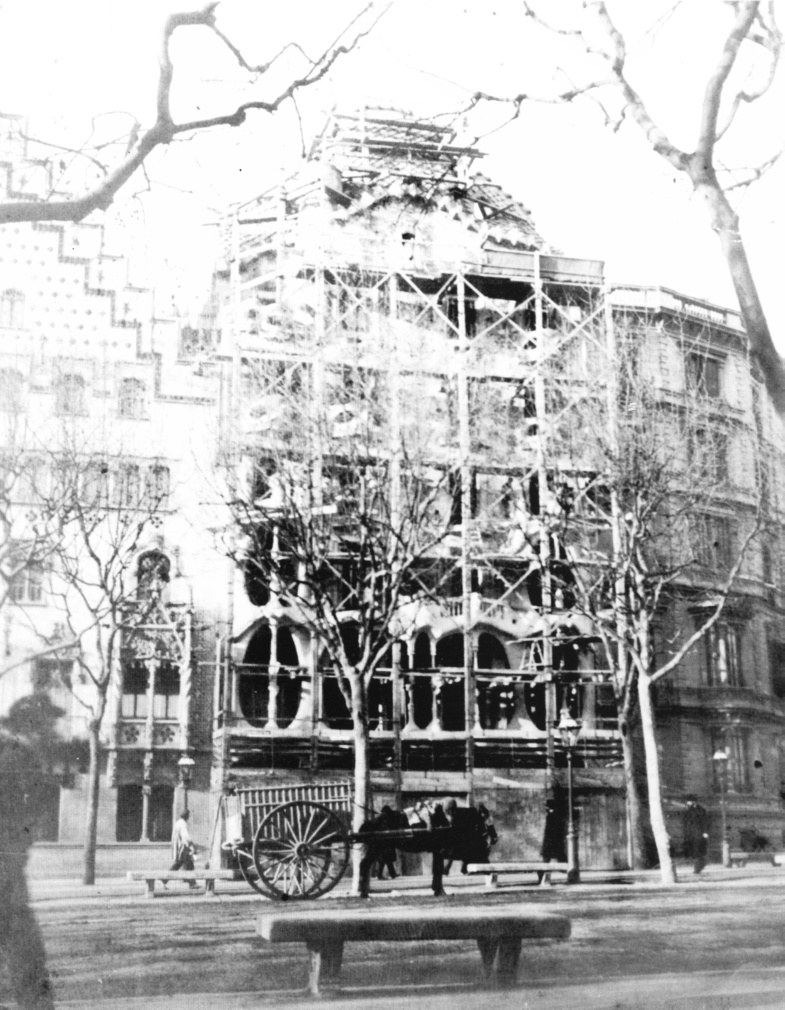
The 1905 eclipse occurred during Gaudí’s most productive period, when he had more than twenty projects underway almost simultaneously. One of these was Casa Batlló, whose renovation had begun the previous year. As a result, during the astronomical event, visitors would have seen little more than scaffolding. It is also a good opportunity to recall the state of the Sagrada Família at that time.
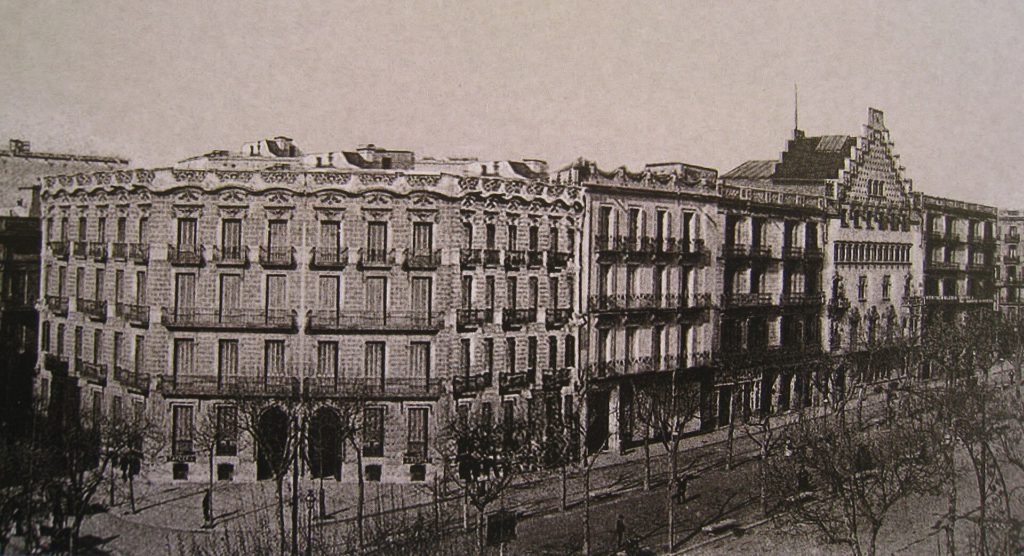 Casa Milà, better known as La Pedrera, did not yet exist, as Gaudí would not begin work on it until 1906. Neither did the Crypt of Colònia Güell, built between 1908 and 1915. Park Güell, whose construction began in 1900, was still a work in progress. On January 4, 1903, an article published in the Yearbook of the Association of Architects reported that the two entrance pavilions, the main staircase, the perimeter wall, the shelter, the viaducts, and part of the large esplanade had already been completed. However, the famous ceramic bench surrounding it would not be finished until 1914.
Works We Can No Longer See
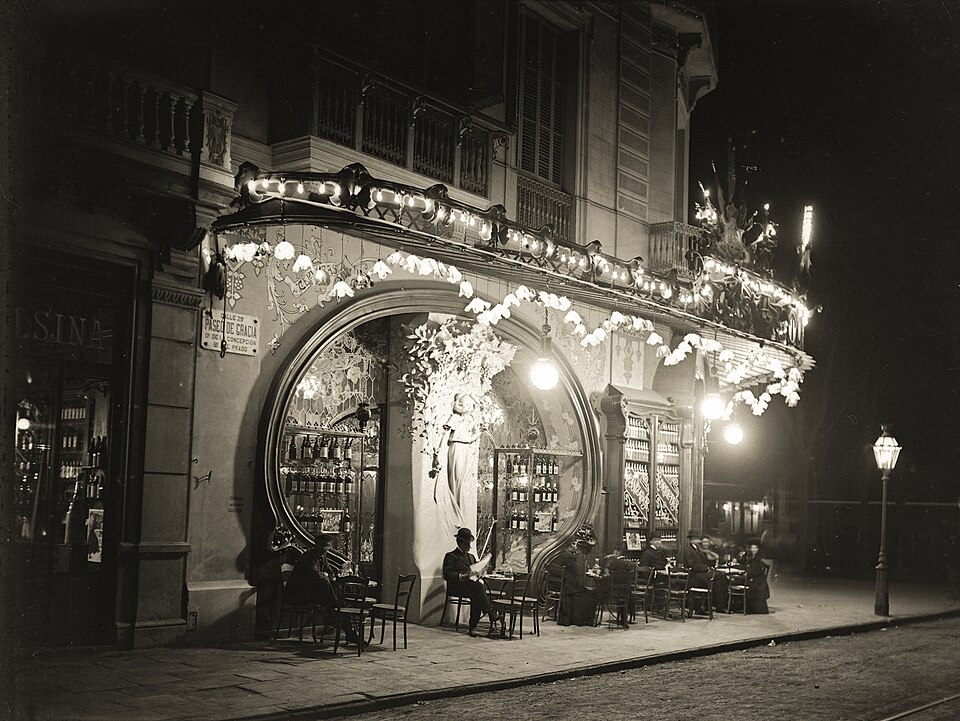
Eclipses may return, but unfortunately the same cannot be said for buildings that have disappeared. In 1905, however, these works still existed. Among them was the Bar Torino, created in 1902 and demolished in 1911, a project on which Gaudí collaborated with Pere Falqués, designer of the iconic lamp-post benches along Passeig de Gràcia, and Josep Puig i Cadafalch, architect of Casa Amatller, the building next to Casa Batlló.
Another remarkable lost work was the Sala Mercè, an innovative cinema and performance venue decorated by Gaudí. Opened in 1904, it disappeared in 1913.
 The driving force behind the project was the painter and entrepreneur Lluís Graner, a close friend of Gaudí. Coincidentally, Gaudí also began designing a house for Graner on a street just a short walk from Torre Bellesguard. Due to financial difficulties, however, the architect was only able to complete the entrance gate, which featured a small window for birds (see: the Graner cinema and chalet).
The year 1905 also marked the ceremonial laying of the foundation stone for the Palau de la Música Catalana, the future home of the Orfeó Català. Gaudí would later become a regular attendee at its concerts thanks to his love of music and his friendship with Lluís Millet, the choir’s director (see: return to the origins).
At that time, work had not yet begun on Via Laietana. Construction would start in 1908, triggering a vast urban transformation that led to the demolition of around 85 streets and 2,200 buildings, including numerous medieval palaces and monasteries, while forcing approximately 10,000 residents to relocate. On the day of the 1905 eclipse, however, all of these houses, palaces, and monasteries were still standing in their original locations.
Gaudí had begun living very close to these buildings (see: Gaudí’s first homes in Barcelona).
In short, in the Barcelona of 1905, we might have witnessed the very same eclipse, but certainly not the same city…