September 26, 2026
By Ferran Garcés
A well-known phrase by Antoni Gaudí speaks of his respect and admiration for the plants which grow taller: “This tree near my workshop; this is my master!” The architect, enamored with Nature and Liturgy, was able to draw important lessons from these plants; lessons that are both “physical”, or architectural, and “spiritual”, or symbolic. A study of this subject would be difficult to summarize. To keep it brief, today we will limit ourselves to commenting on a small example of the second case, the symbolic one.
The Tree of a King and the Virgin Mary
Jesse was the father of David, the archetype of a sovereign, and Christian tradition considers Jesus to be his descendant. In the Book of Isaiah, it is said: “A shoot will come up from the stump of Jesse; from his roots a Branch will bear fruit.” Later, in the Book of Revelation, Jesus declares: “I am the Root and the Offspring of David.”
This prophecy is a recurring theme in art, especially in medieval art, because it supported two foundations of feudal society: religious authority and the institution of monarchy by divine right. Consequently, it appears extensively in stained-glass windows, paintings, and reliefs. Traditionally, the image is usually represented as follows:
· At the base, in the roots, Jesse appears sleeping or lying on the ground.
· In the center, we see the trunk growing from Jesse’s chest or abdomen, and the branches, on which the faces of the various kings of Judah, such as David or Solomon, and the prophets who foretold the Messiah are placed.
· In the crown, at the very top of the tree, the Virgin Mary and her son, Jesus, are depicted as the ultimate fruit of the prophecy.
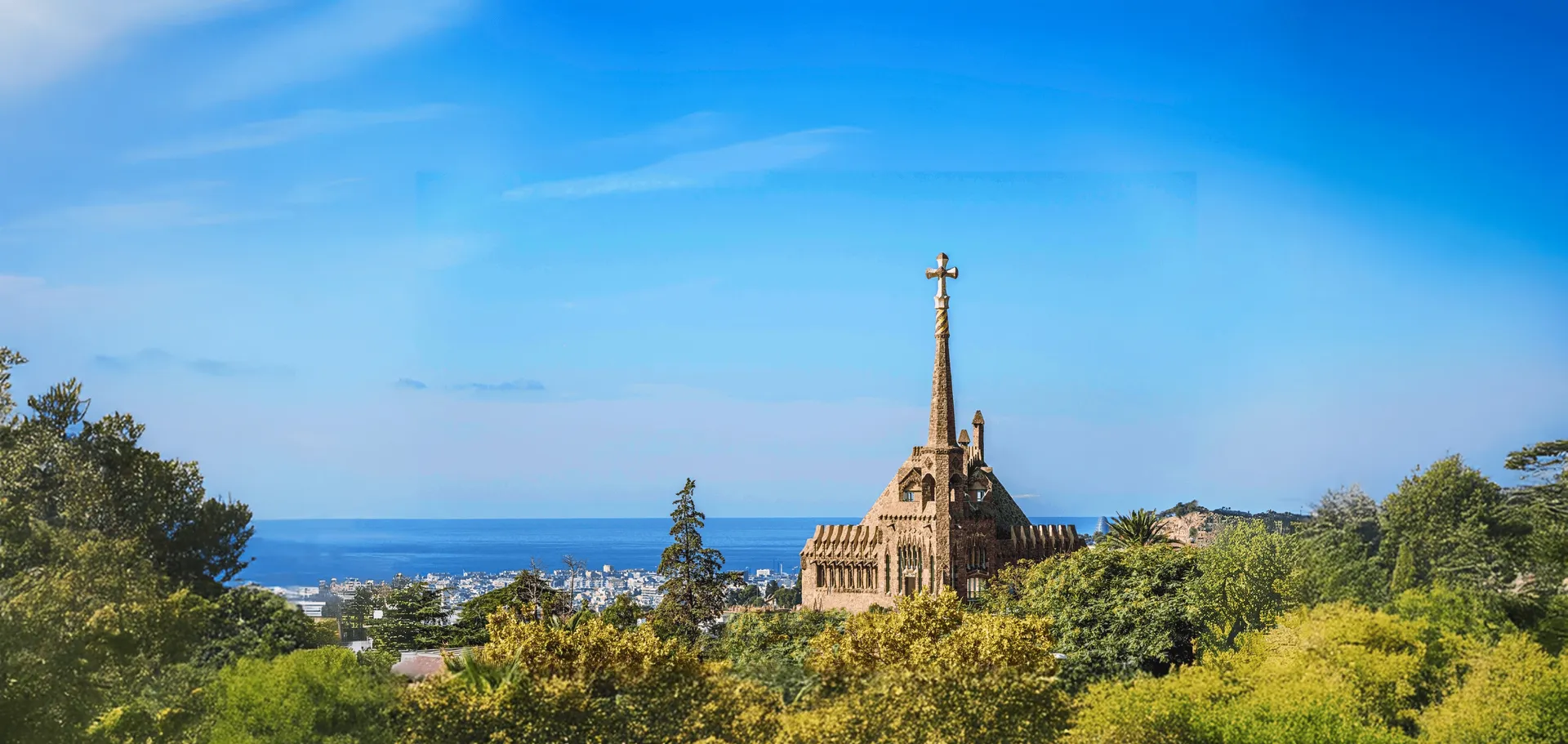
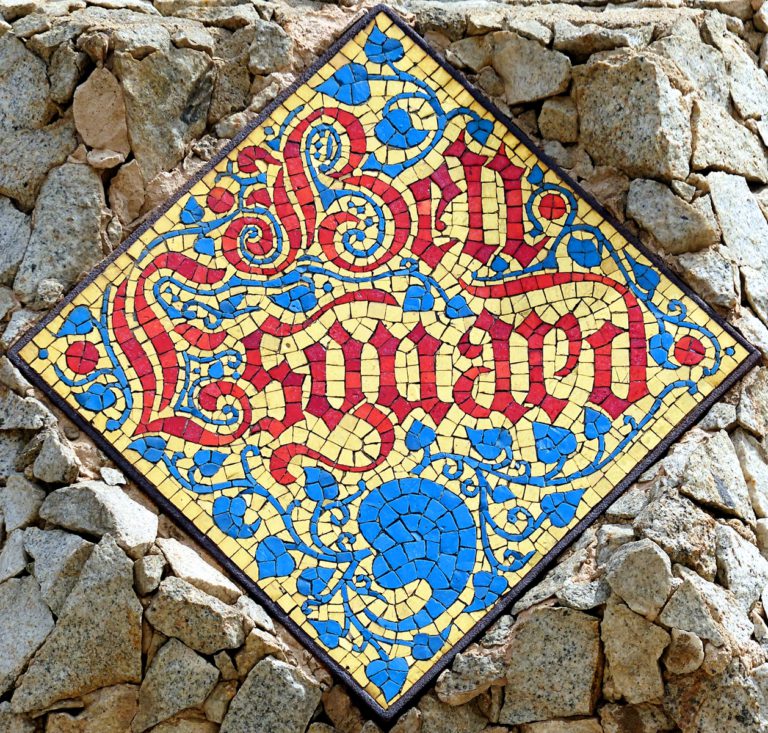
Gaudí represented this theme on the Nativity façade of the Sagrada Família, as is logical, to show the genealogy of Jesus. In Torre Bellesguard, he repeated it, but in a less obvious way. To understand its representation, we must remember that the house was built on the same site where the old palace of King Martí I had been built, a deeply religious monarch who represents the last member of the House of Barcelona. It is no coincidence, then, that the motif of the tree of Jesse was included in the final work. We can discover it on the door of the house, in the golden mosaic in the shape of a square shield rotated 45°. However, as is usual with Gaudí, his recreation of this motif was very personal. According to Galdric Santana, current Gaudí Chair, “The letters of the house with the name “Bell-Esguard” are red, and the ornamentation with branches and leaves also appears, in the form of a family tree, with an enlarged leaf, where Gaudí also performs the double symbolic game of the tree of Jesse, representing the Virgin Mary, and at the same time the concept of the family tree of the Barcelona royal dynasty.” (1).
Notes
(1) Santana Roma, Galdric (2021), “Regarding Bellesguard.” In: Permanyer, Lluís (editor), Sagnier and the Modernists: The Craft of Architecture 1880–1930, RBA, Barcelona, p. 133, note 9.