February 6, 2026
By Ferran Garcés
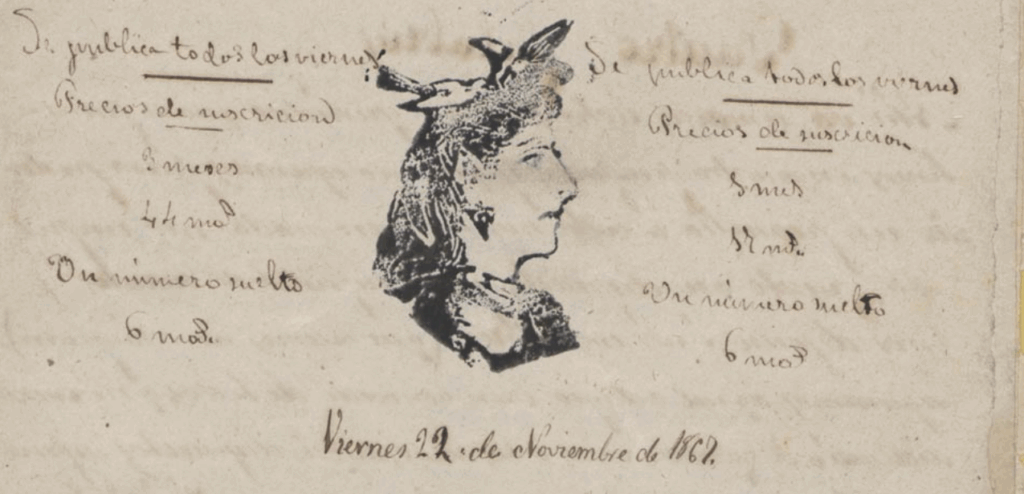
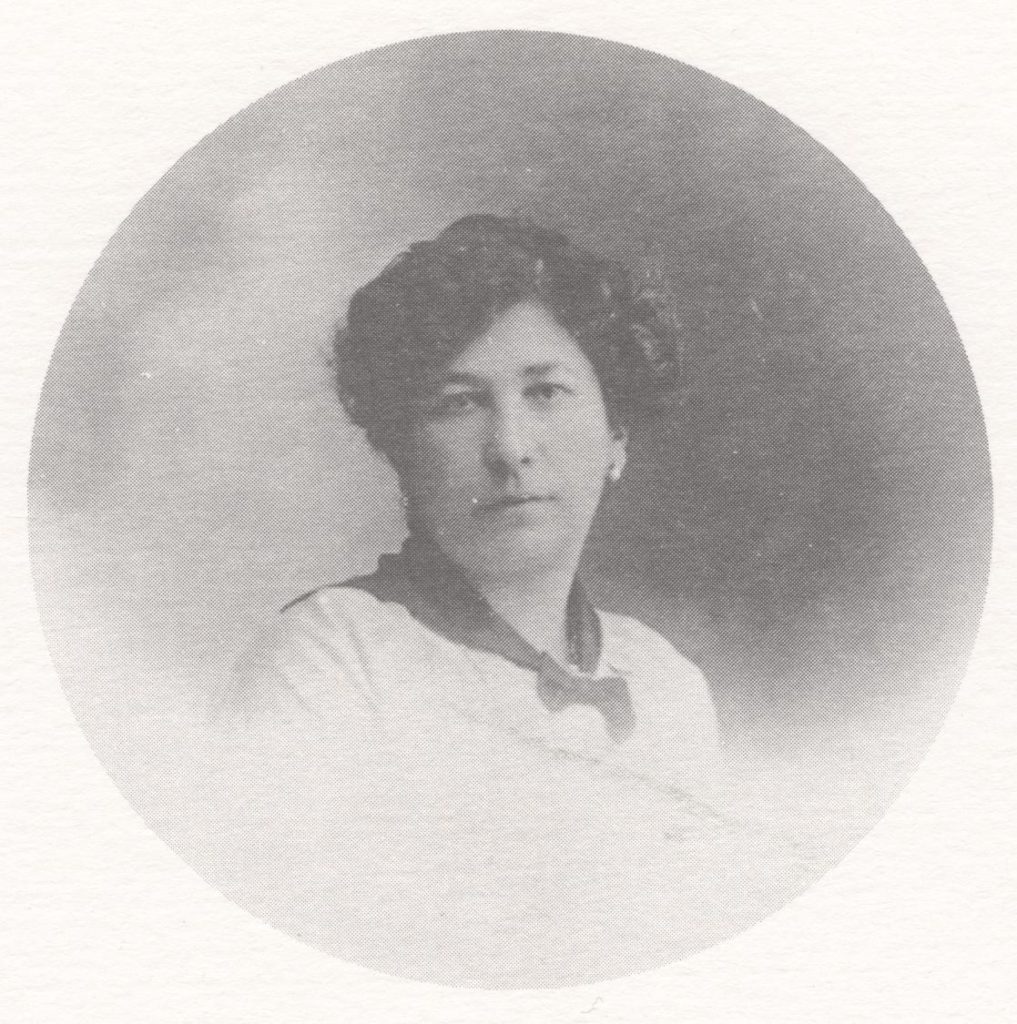
Gaudí, still a student, took part with some friends in a school magazine (see: El Arlequin). One of his drawings is the one shown in the header. Who is this woman? We do not know. What we can say is when it was made: Friday, 22 November 1867. The following year, Gaudí left Reus and went to Barcelona, determined to study architecture, a career in which he would relate to the women we are about to meet. This article complements the one published last Friday, where we looked at the women closest to Gaudí’s personal sphere (see: family members and the impossible love).
Saint Teresa, the “spiritual” client
College of the Teresianas (1887–1889)
We begin with an “indirect” client. She, born in 1515, did not commission Gaudí, logically, but the project was carried out in her name. Indeed, only ten years after obtaining his degree, between 1888 and 1890, Gaudí would build the motherhouse of the College of the Teresianas, at the request of Enric d’Ossó, founder of the Company of Saint Teresa of Jesus. This building is known as a “college”, but it is also a convent and the motherhouse of the order. Both spaces, the school and the convent, are inspired by The Interior Castle, an influential spiritual book by Saint Teresa. In fact, around this time Gaudí began a progressive spiritual transformation that would translate into a gradual increase in liturgical and mystical symbolism in his work, including his civic buildings (see: The other source of inspiration of Gaudí).
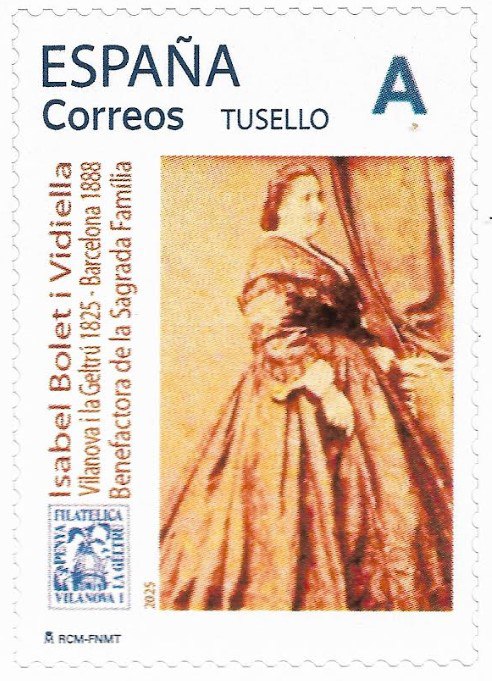
Isabel Bolet i Vidiella
The Sagrada Família (around 1891)
The full name of Gaudí’s most famous building is the Expiatory Temple of the Sagrada Família, because its purpose was to be financed through popular donations. Gaudí assumed the direction of this unusual work in 1883, at the age of thirty‑one. Unfortunately, the first contributions were not as expected. The project was in danger, debts accumulated and, unexpectedly, in 1891 a surprising contribution of half a million pesetas arrived, an extraordinary sum at the end of the 19th century. The magazine El Propagador, in 1926, the year of the architect’s death, stated that the author of the miracle answered to the name “doña Isabel”, without providing any further information. Who was she? For decades, her identity and memory faded over time.
After a long investigation, in 2022 Julià Bretos, a Gaudí enthusiast, completed her name as Isabel Bolet i Vidiella, which allowed him to provide more personal details in a book that received great attention: The Lady Without a Face, published by Almuzara. In an interview, Bretos highlights that this amount changed the course of the works, since until then the project Gaudí was building was that of a “small church”. In contrast, the mysterious donation gave wings to the architect. He could now “think big” (1). Ricard Opisso, then an assistant to Gaudí at the temple, also expressed the same opinion in his memoirs (2).
Isabel Bolet i Vidiella was born in Vilanova i la Geltrú. Despite her humble origins and being an orphan, she married Ignasi Marqués, owner of an important forge in Sant Josep de Sants. Her residence was located at number 6 Passeig de Gràcia, in a building that no longer exists: it was demolished to build the current El Corte Inglés in Plaça Catalunya.
After her husband’s death, in 1885, Isabel Bolet left in her will that the money obtained from the sale of the forge should be destined to the Sagrada Família. She died in 1888, aged sixty‑three, of pneumonia, but the will was not executed immediately. Some relatives contested it and a legal battle was required to enforce it. For this reason, the money did not reach its destination until three years later. In other words, the “lady without a face” never saw the result of her donation and, moreover, she did it without seeking glory because, in her will, she added the condition of remaining anonymous (2). Recently, Bretos succeeded in having a commemorative postage stamp issued by Correos with the image of this mysterious benefactor.
Juliana Pintó
Casa Calvet (1898–1900)
At the end of 1897, the architect accepted the commission for his first house in the Eixample. It was requested by Juliana Pintó, widow of Pedro Màrtir Calvet, and her children, owners of the cotton factory Hijos de Pedro Màrtir Calvet. The resulting work was the only one for which Gaudí received a prize during his lifetime, awarded by Barcelona City Council for the best building of the year 1900. However, very little has been said about this project and even less about this owner. She has no article on Wikipedia and, in biographies, she is only “the widow of Mr. Calvet”. No photograph has been preserved either.
Isabel Güell i López
House on Junta de Comerç Street (1901)
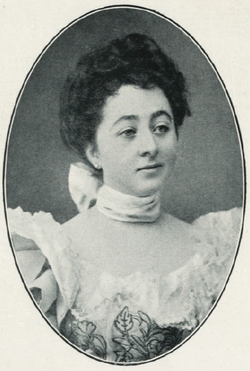
The following anecdote is one of the most frequently repeated in the architect’s life. Before mentioning it, however, it should be remembered that Isabel Güell, the eldest daughter of Count Güell, was a professional pianist and composer, like her sister Maria. Her musical adaptations of poems by Jacint Verdaguer stand out, as well as two religious works: a Stabat Mater (1917) and a Te Deum (1918). Consequently, the presence of a piano in her home was no whim.
So, that said, the anecdote. Isabel Güell i López lived in the Palau Güell with her parents and siblings from adolescence until she married, on 19 January 1901, Carles Sentmenat i Sentmenat, Marquis of Castelldosrius. Then the new wife went to live at her husband’s residence, at number 19 Mendizábal Street, now Junta de Comerç. It was a house halfway between the Castelldosrius palace and the Palau Güell. The new residence was quickly decorated by Gaudí and, once the renovation was completed, Isabel realized that she could not fit her wedding gift: an Érard grand piano. Then, it is said, the composer asked the architect for a solution. His answer became famous: “Madam, play the violin”.
The anecdote we have just recounted has been placed in other works by Gaudí: the Palau Güell, Casa Batlló and Casa Milà. However, it seems that the setting was the one just mentioned. This is affirmed, among other sources, by the tourism website of Barcelona City Council and a specific biography of its protagonist, Isabel Güell i López (3). In 1914, the poet Josep Carner, in his book Auques i ventalls, included a poem that collected this anecdote: “L’auca d’una resposta del senyor Gaudí”. Finally, it should be remembered that Isabel Güell i López was also an excellent organist and, as such, used to play the organ at the Palau Güell where she had grown up.
María Sagués i Molins
Casa Figueras or Torre Bellesguard (1900–1909)
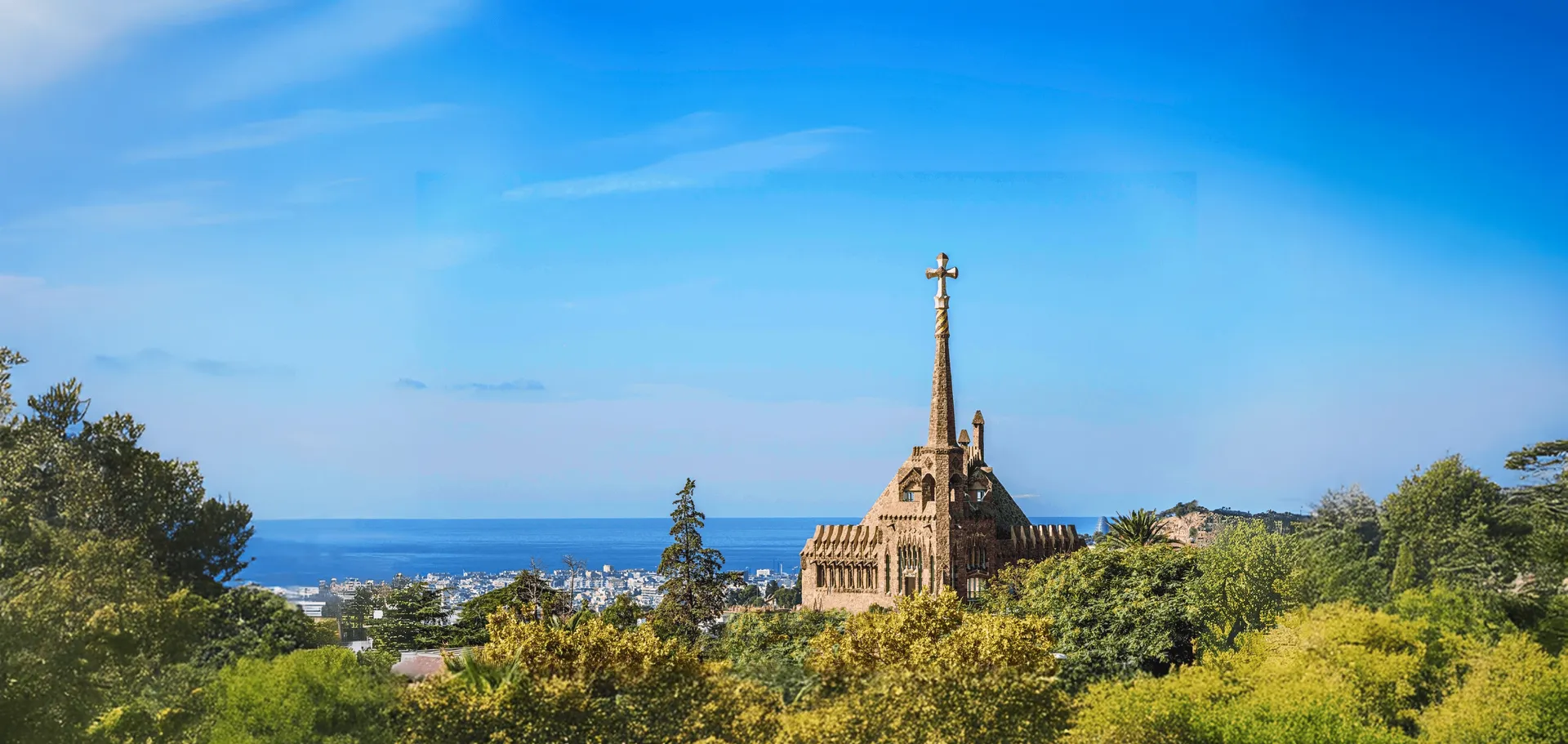
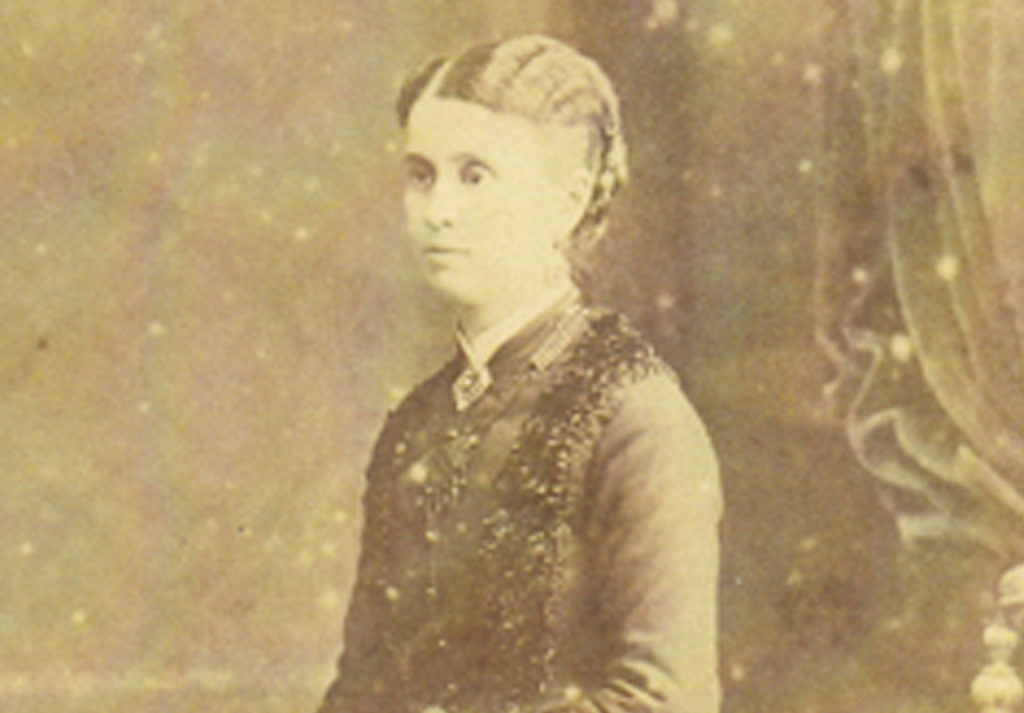
Bellesguard refers to the name of the former castle of Martin I the Humane, from which Gaudí took inspiration to create the current building. Figueras, as in the case of Casa Calvet, refers to a husband who had died at the time of construction (see: Maria Sagués). In the guide by Barcelona City Council, Dones de Sarrià-Sant Gervasi, written by Isabel Segura Soriano, we read:
“Years passed, centuries passed and the building took on various forms and transfers of ownership, until it reached Maria Sagués, the owner who, in 1902, commissioned architect Gaudí to carry out the total reconstruction project of the building, as we see it today. Maria Sagués, despite being a widow at the time, was responsible for contacting Gaudí and commissioning the project. Betting on innovation in architectural language, the house is known more by the name of the already deceased husband, Figueres, than by her own name. This is not an isolated case in the memory of the city, a memory that is often very selective when it comes to remembering women’s initiatives”.
Amàlia Godó i Belaunzarán
Casa Batlló (1904–1906)
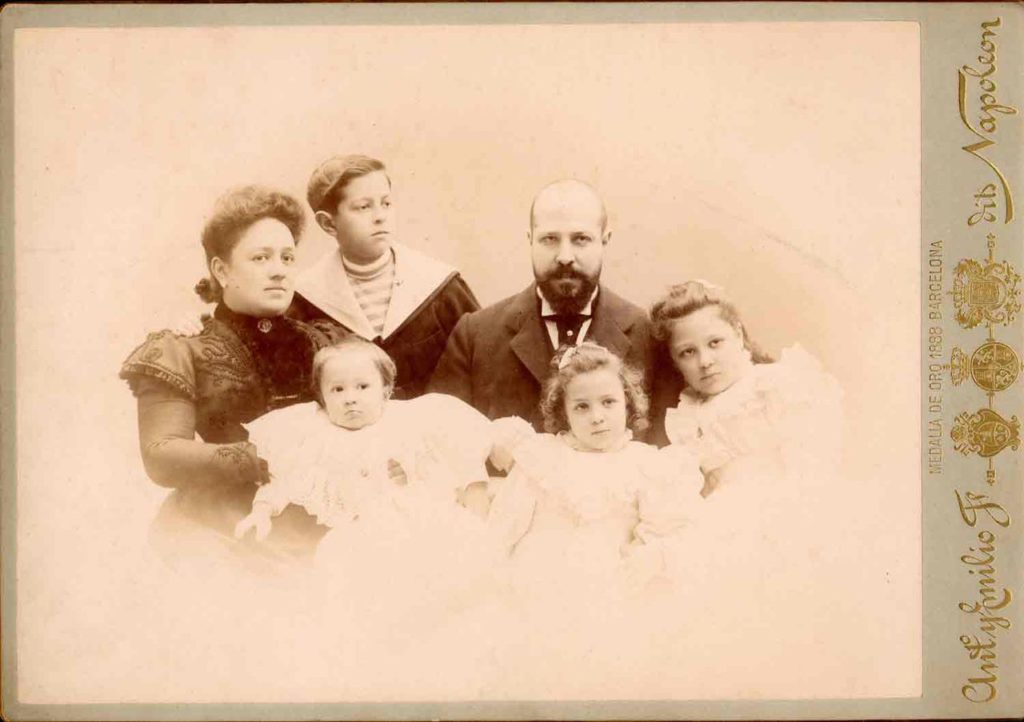
The case of Casa Batlló seems an exception to the rule we mentioned earlier. Here, the owner was alive during construction and it was he who hired Gaudí. As in the cases of Juliana Pintó and Maria Sagués, very little is known about Mrs. Batlló. Only that she was a member of the Godó family, founders of the newspaper La Vanguardia, and that she married Josep Batlló, a businessman in the textile sector. The couple lived on the main floor of the house until the death of both (1934, the husband, and 1940, the wife). The children did not take long to sell the house.
Roser Segimon Artells
Casa Milà, or La Pedrera (1906–1912)
At La Pedrera, the pattern already seen at Casa Calvet and Casa Figueras is repeated, where the husband’s name has survived instead of that of the legal owner. However, unlike them, Roser Segimon is the protagonist of a life well known enough to have an entry on Wikipedia. For example, she also provided the money to build La Monumental, a bullring inaugurated in 1914. Her fortune came from her first husband, Josep Guardiola, a merchant who, like so many others, had made his fortune in the Americas. After her wedding to Pere Milà, her second husband, someone spread a joke that quickly became famous in Barcelona society: whom did Mr. Milà marry, “the widow Guardiola” or “the widow’s money box”?
Be that as it may, Mr. Milà died in 1935 and Roser in 1964, at the age of 94. She always lived in the house that bears her husband’s name, but in an apartment very different from the one Gaudí had designed. Already during the construction of the house, relations between her and the architect were not good.
Firstly, the architect wanted to crown the façade with a sculptural group over four metres high, representing a Virgin of the Rosary. When the Milà couple refused, the image was never completed nor placed in the intended position. Secondly, after Gaudí’s death in 1926, Roser Segimon got rid of a large part of the furniture designed by the architect and, as if that were not enough, remodelled the home in another style, altering ceilings, floors, shutters, doors and windows. Recently, previously unknown documents from 1927 have been discovered that reveal the extent of the renovation (5).
Notes
(1) March, Hector (18/12/2025), “La misteriosa dona que va finançar la construcció de la Sagrada Família”, rac1 website.
(2) Opisso Sala, Ricard (1952), “La naturaleza en la obra de Gaudí” (III accésit), in the V Certamen Centro de Lectura. Volume II. Publication of Revista del Centro de Lectura, Reus, pp. 600–601.
(3) Bretos, Julià (consulted 4/02/2026), “Testamento de Isabel Bolet”, Julià Bretos’s blog.
(4) Sanhuesa Fonseca, María (2016), “Isabel y María Luisa Güell y López, dos compositoras en el Modernismo. Vida, entorno y catálogo de sus obras”, RACBAS, Boletín XXX, University of Oviedo, p. 51.
Editorial staff: “Ruta dones de Ciutat Vella / Isabel Güell i López”, barcelonaturisme website.
(5) Editorial staff (consulted 4/02/2026), “Els sostres desapareguts de La Pedrera”, La Pedrera website