June 17, 2026
By Ferran Garcés
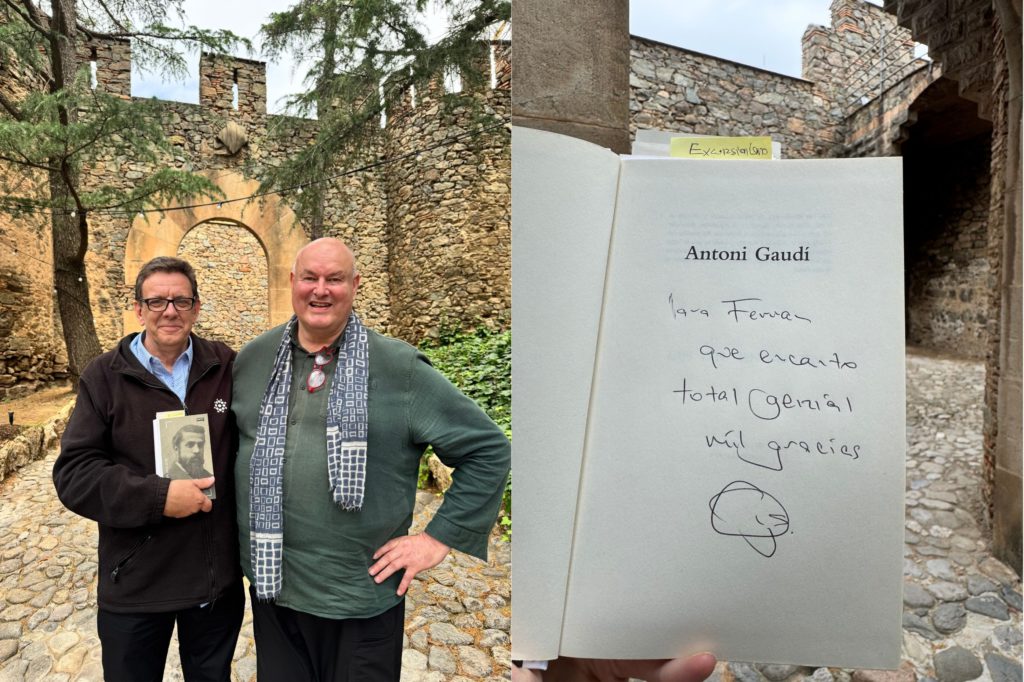
Last Wednesday, June 10, we were visited by Gijs van Hensbergen, one of the most renowned biographers of Antoni Gaudí. It was truly a pleasure and an honour to show him the house and speak with him. On our blog, we regularly cite his main book, a biography of the architect with the simple title Antoni Gaudí (1). This book appeared in Spanish bookstores in 2002, on the occasion of the International Gaudí Year, which, at the time, celebrated the 150th anniversary of the architect’s birth. The book quickly gained wide recognition. So much so that it has never gone out of print. This year, the Gaudí Year 2026, which marks the 100th anniversary of the death of the author of the Sagrada Familia, it continues to be one of the reference studies.
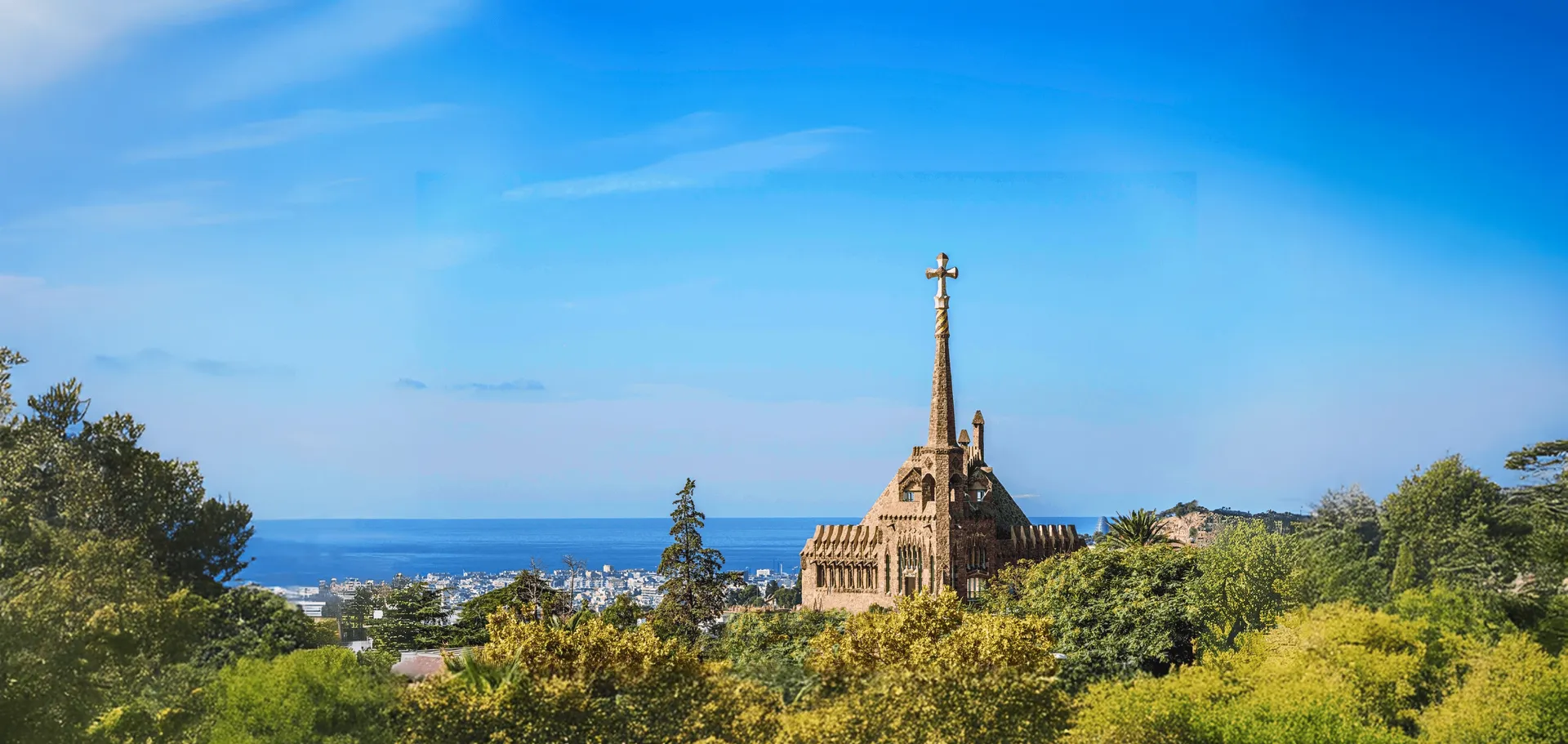
Consequently, throughout the current year, Gijs has been the subject of various interviews. In one of them, he recently stated: “In Gaudí you have a man with a medieval soul and a very avant-garde mind.” Perhaps Torre Bellesguard is one of the buildings that best exemplifies this definition. Below, we will summarise the section dedicated to Bellesguard in Gijs’ book.
It was special…
“Bellesguard was special for Gaudí, who, for this reason, discouraged any member of his studio from participating in its design.” The reason? To express with total freedom his love for Catalonia, paying tribute to Martin I the Humane, the last member of the House of Barcelona and the builder of the old castle that inspired Gaudí. In fact, Bellesguard was so special to him that he wanted to take full responsibility for its design. A “deliberately archaic” design that, at the same time, “was counterbalanced by powerful architectural innovations.” Gijs highlights the following:
Medieval and avant-garde
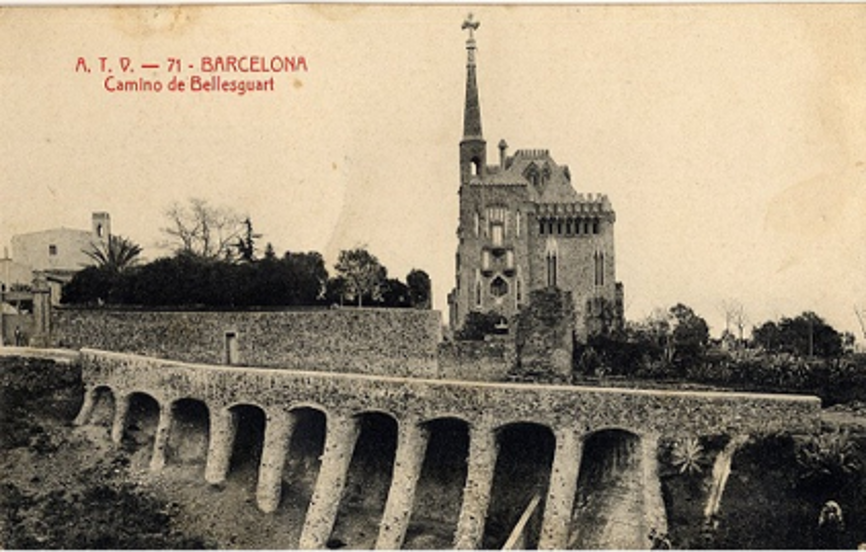
First, the viaduct. Located outside the house, it is an original solution both in terms of the material used and the technique followed. “The material used consisted largely of rocks and fragments of stone that Gaudí ingeniously reused. By creating moulds, the hollow forms were filled with layers of stone fragments and then mortar. This infinitely flexible method —”it could be repeated again and again”— represented an exploration that was as inexpensive as it was fascinating of mass-production techniques.” (see also: viaducts and bridges)
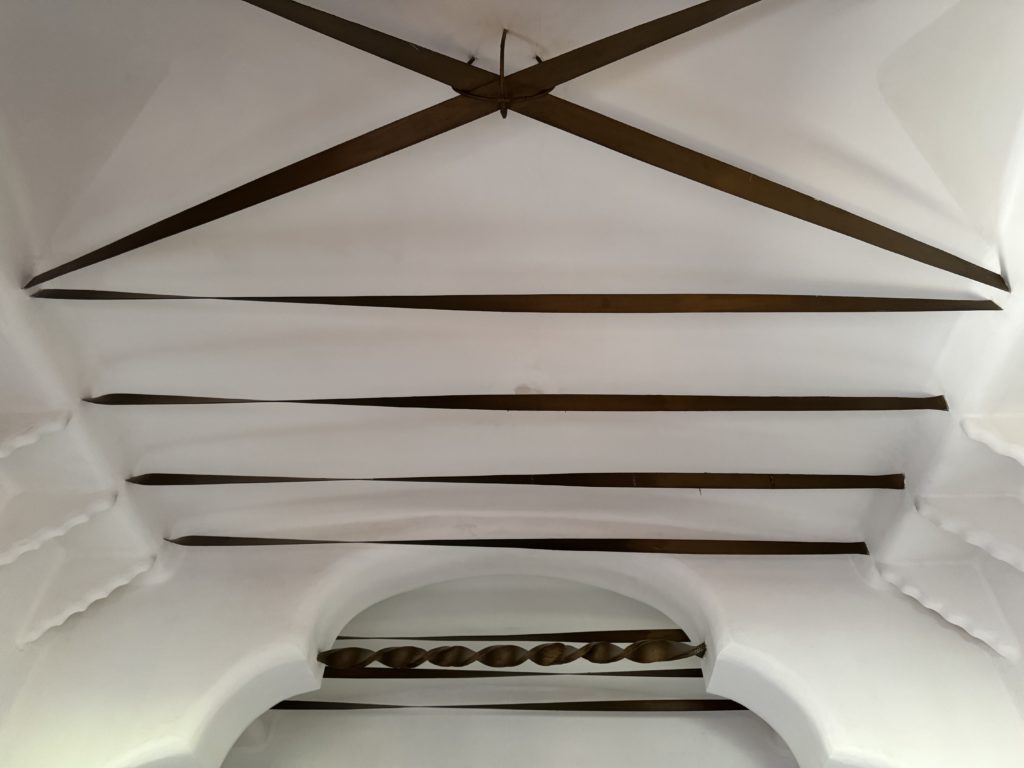
Second, the ceilings, inside the house: “In other areas, taut metal bands twist just above head height, serving both as ties and as metaphors for elastic space in perfect tension. Bellesguard represents an impeccable synthesis of structural science with elegant design.” Furthermore, according to Gijs, “Gaudí explored garden design and the relationship between a building and nature”, through the use of local stone from the Collserola mountain to cover the entire façade of the house.
 Notes
Notes
(1) Hensbergen, Gijs van (2021), Antoni Gaudí, Penguin Random House Group Editorial, Barcelona, p. 158-160
(2) Millet, Eva (7/6/2026), Gijs Van Hensbergen, biógrafo: “En Gaudí tienes a un hombre con un alma medieval y un cerebro muy vanguardista”, La Vanguardia.