August 14, 2026
By Ferran Garcés
In 1960, the Barcelona publishing house Claret released Antoni Gaudí. Mi itinerario con el arquitecto (Antoni Gaudí. My Journey with the Architect). Unfortunately, the book is now out of print and difficult to find. This is a real pity, as it is one of the closest and most personal accounts of Gaudí’s life and work. Its author, Joan Matamala, was the only biographer who had known the master architect since childhood.
His father, Llorenç Matamala, was one of Gaudí’s closest collaborators and friends, to the point that the two men cared for each other during periods of illness (see: Gaudí’s illnesses). Furthermore, the Matamala family home was located very close to the Sagrada Família, where both father and son worked as sculptors. The master’s visits were frequent. Consequently, Joan Matamala’s perspective is one of the most intimate and authentic testimonies regarding Gaudí’s work and life.
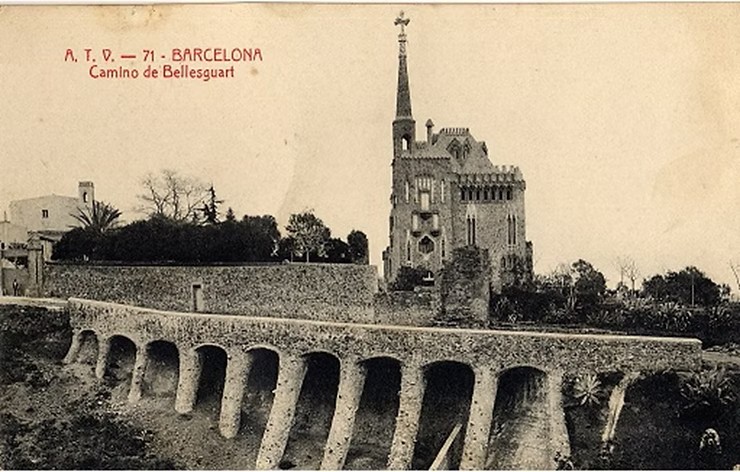
The following passage is an example of this. In it, Matamala highlights how Bellesguard was one of Gaudí’s most personal creations.
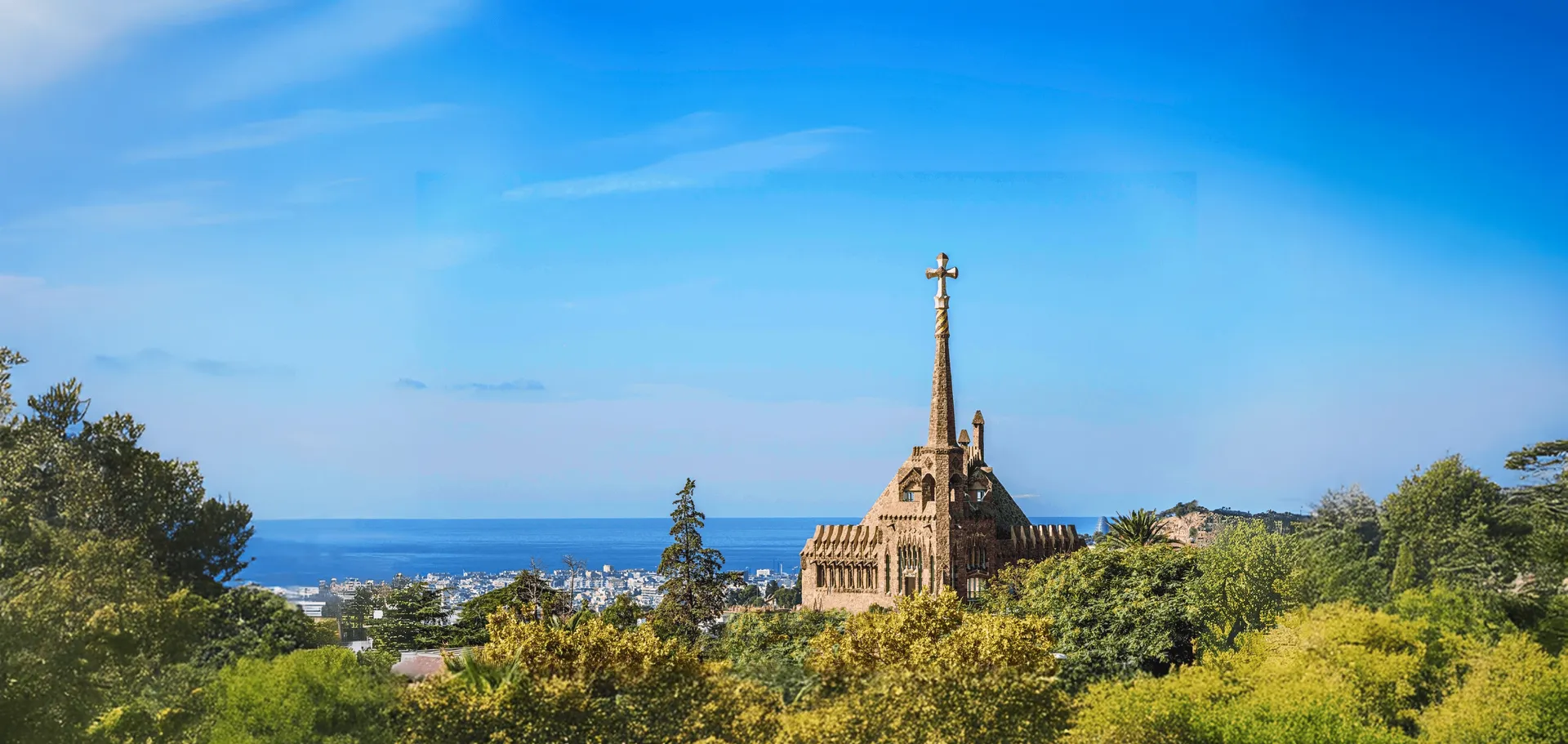
“Gaudí loved that place.” Even today, those who climb the mountain on a clear day from the Bonanova side will discover one of the most beautiful views Barcelona can offer, with the vibrant blue Mediterranean stretching across the horizon. Gaudí spread out the plans and directed the construction without any outside collaborators.
This is what architect Rubió told me during the final years of his long life. One day, while returning from a visit to Bellesguard, I happened to meet him on the Sarrià train. Among other things, he said:
“Antoni Gaudí wanted to design and direct Bellesguard himself, from beginning to end. He did not want us to help him. I believe he acted this way to spare Mrs. Figueras (the house’s first owner) additional expenses. He undertook the commission with great enthusiasm. Every floor of the house is different. The construction systems are also unprecedented. He applied his ideas without worrying about anything!”
Brief Explanation of the People Mentioned
Because of this close connection, Joan Matamala was also acquainted with several of Gaudí’s collaborators. Among them was the architect Joan Rubió i Bellver, the person speaking in the passage quoted in Matamala’s biography. His testimony is another valuable first-hand account, as he collaborated with Gaudí during the final phase of Bellesguard, serving as an assistant in the construction of the viaduct.
At some point before 1960, the two men met on the Sarrià train following a visit to Bellesguard.
The Mrs. Figueras mentioned in the text was Maria Sagués, widow of Jaume Figueras, owner of a food company. However, because he had already passed away when Gaudí began the project, it was she who purchased the property and commissioned Gaudí to undertake the work in 1900.
By the time the book was published in 1960, however, the property belonged to the Guilera family, who initially converted the house into a clinic. But that is another story, one of the many stories connected to Bellesguard.
Readers who would like to learn more about the Bellesguard described in this book can do so through the following link: Gaudí by Matamala,UPCommons (Vol. 1, PDF, 236.81 MB)